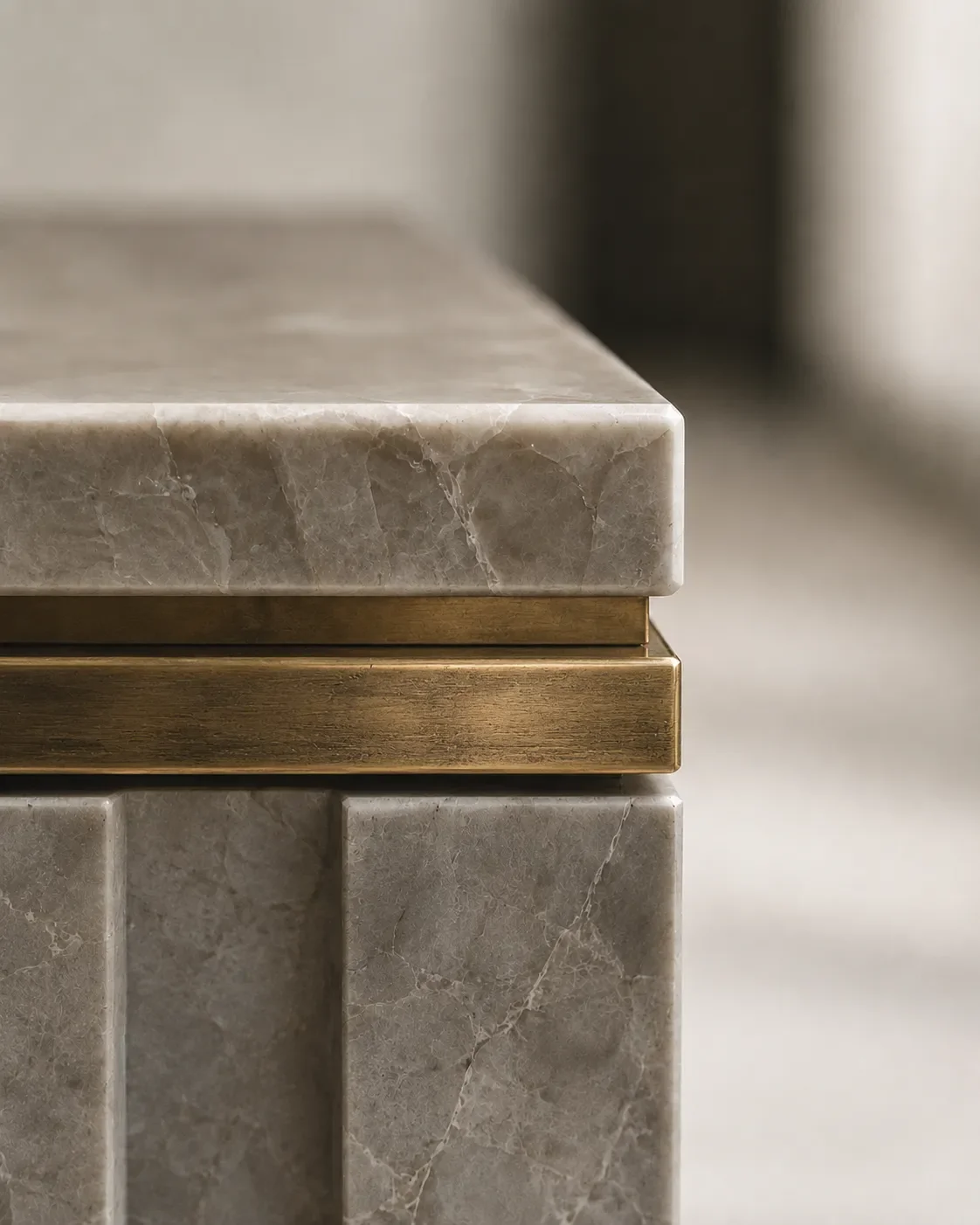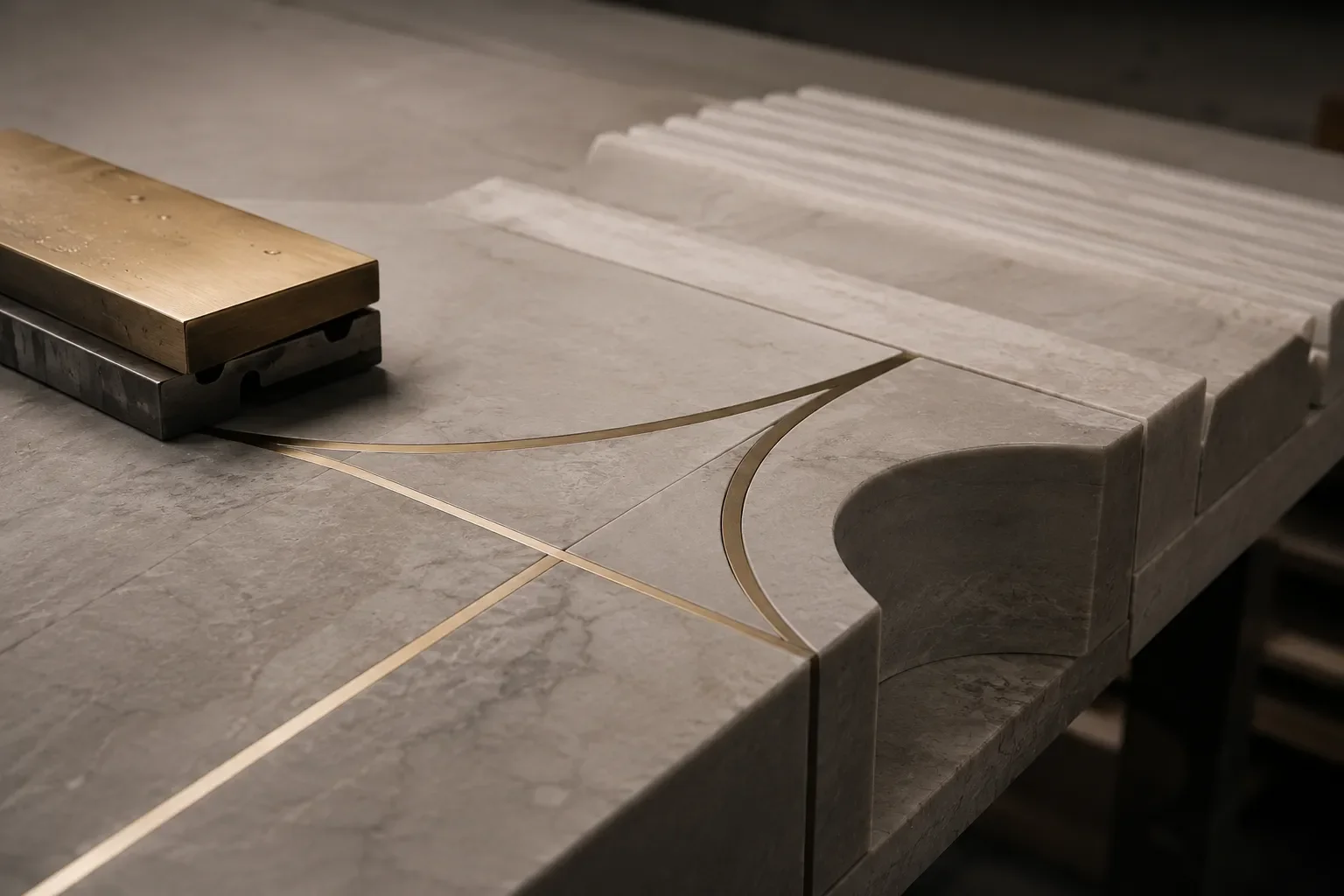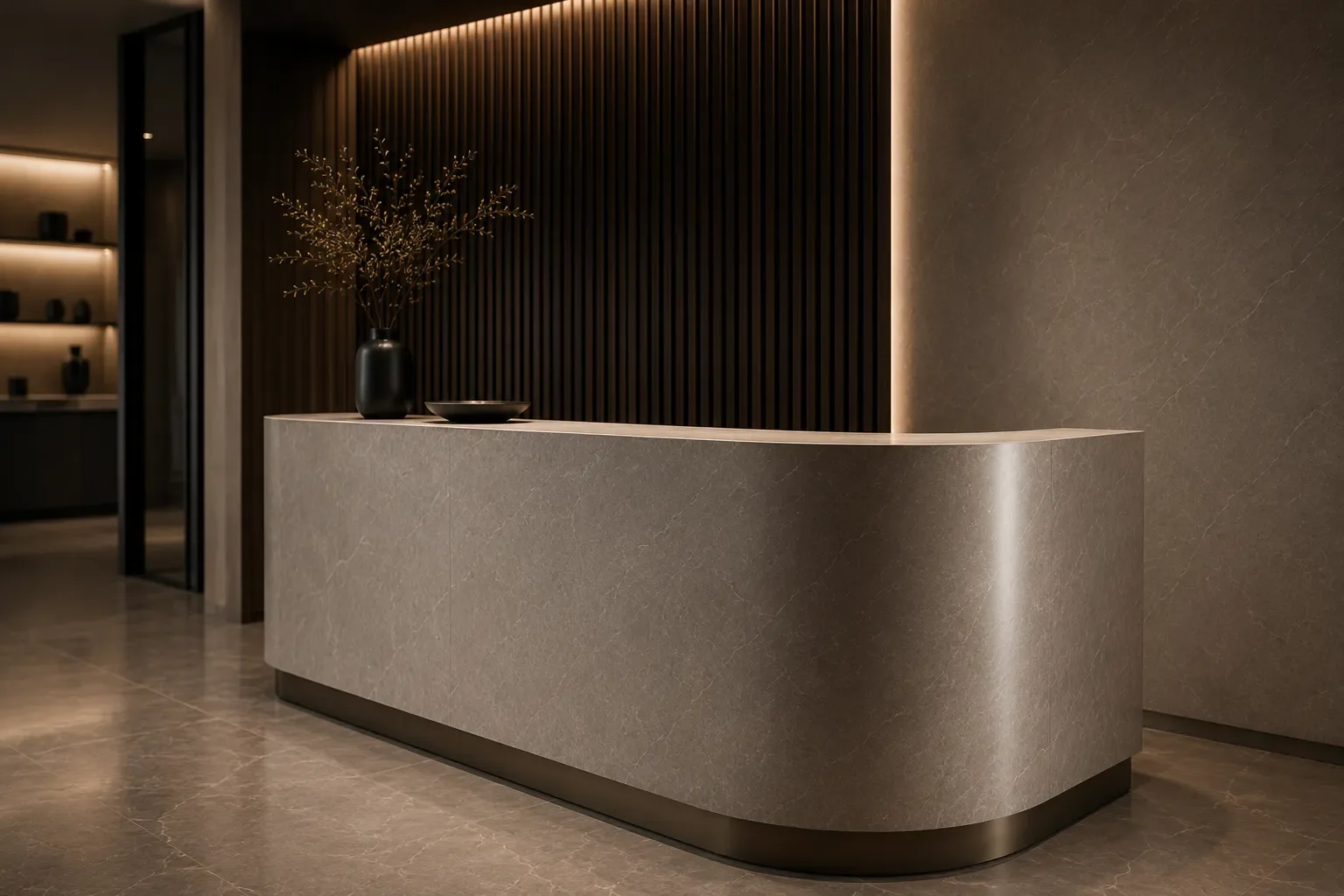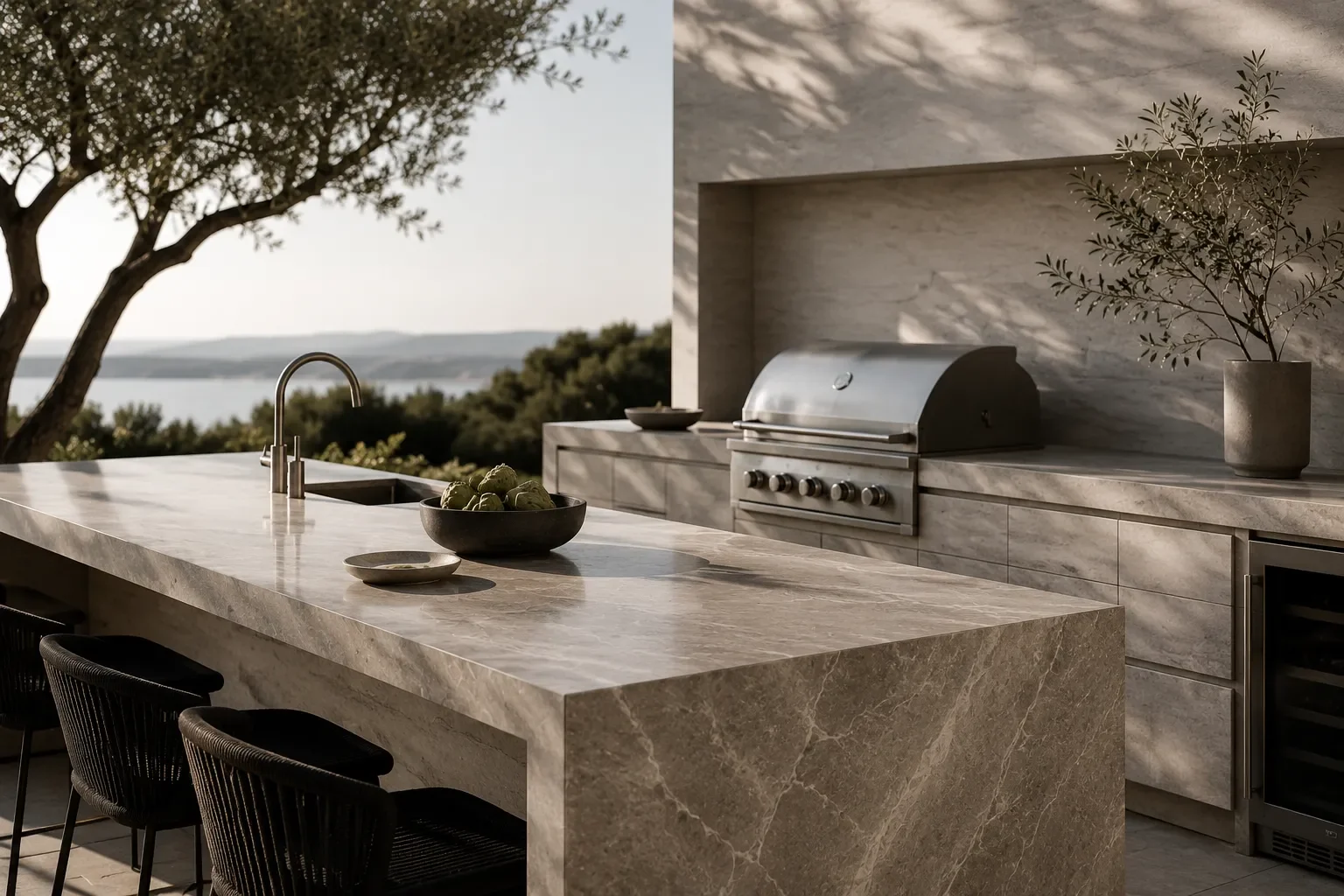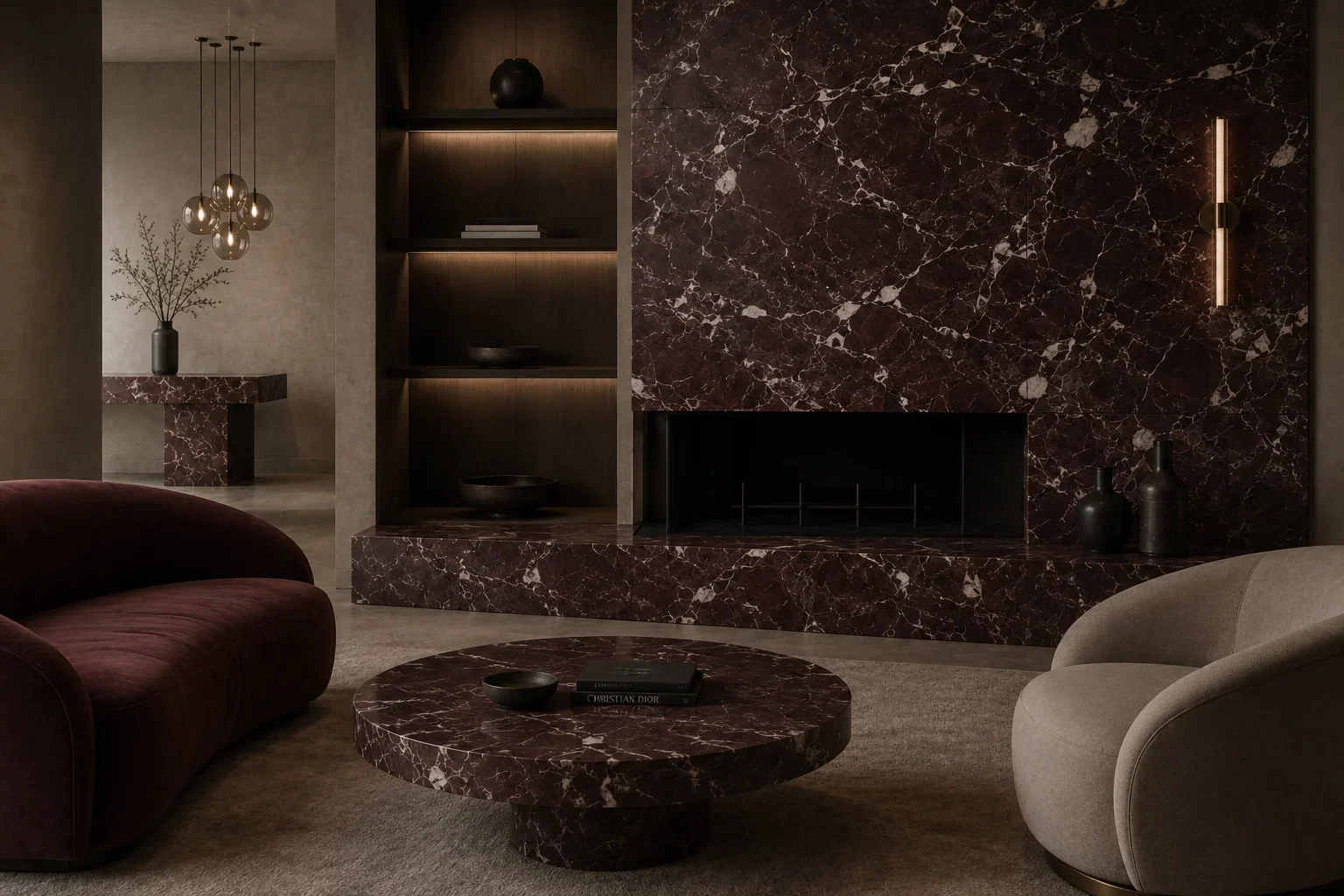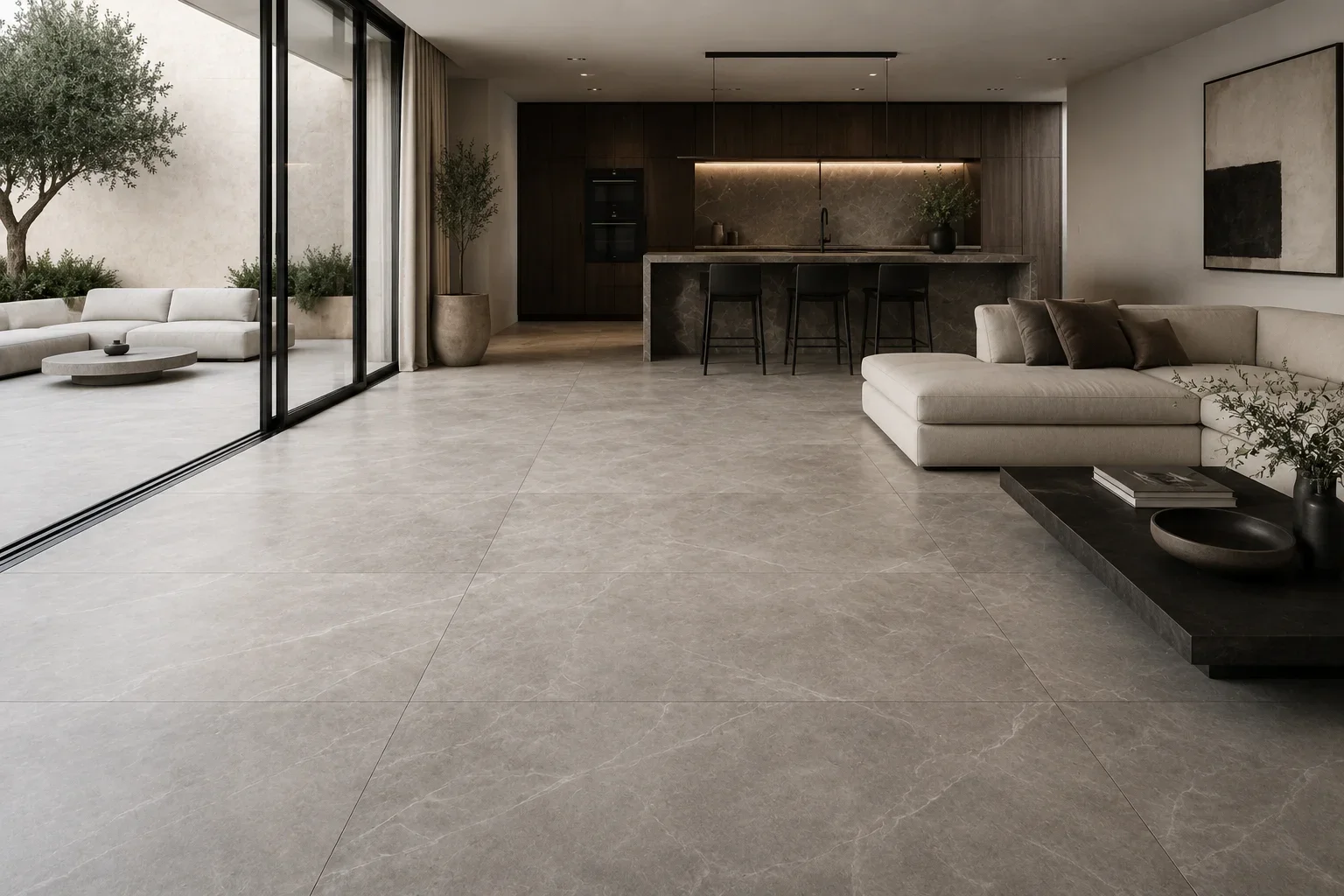
The edge profile is one of the smallest details in a stone installation, but it can have a significant impact on the finished result.
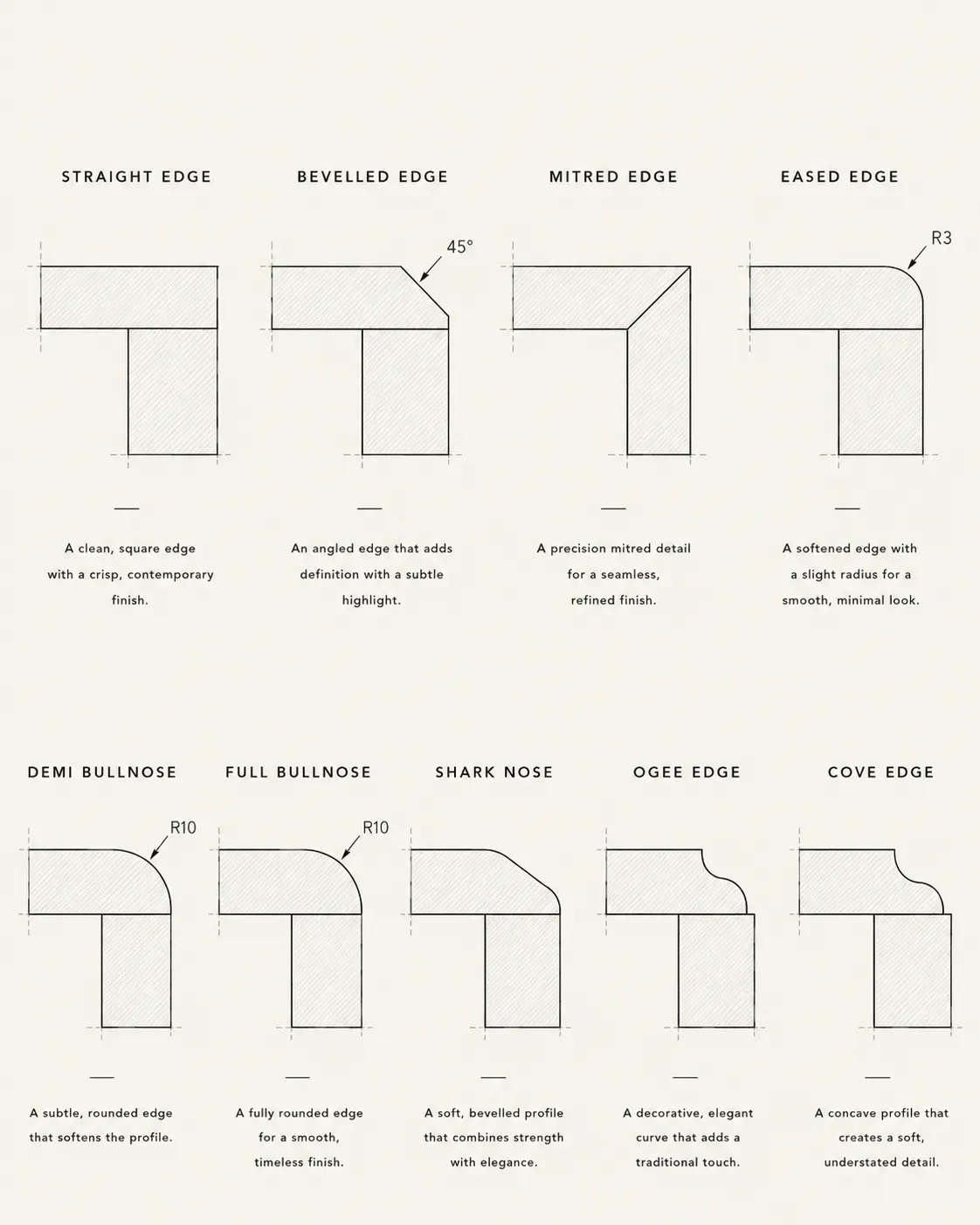
From simple eased and bevelled edges to more architectural details such as shark nose, mitred and waterfall profiles, the right choice depends on the material, its thickness, the application and the overall design intent.
At Southside, edge details are considered as part of the wider fabrication process, balancing appearance with the practical characteristics of the material and how the finished piece will be used.
More Than a Finishing Detail
Edge detailing is often considered towards the end of the specification process. In reality, it can influence the way a piece needs to be fabricated from the outset.
A seemingly simple detail may involve mitred construction, laminated build-ups, CNC machining, hand finishing or careful vein alignment across adjoining pieces.
For highly detailed architectural work, understanding the intended edge early allows the fabricator to consider how the material will behave, how joints can be positioned and how the finished piece can be manufactured without compromising the design.
Mitred Edges
A mitred edge is created by joining pieces cut at an angle, typically allowing a relatively thin slab to create the appearance of a much deeper solid section.
The result can be particularly effective on kitchen islands, reception desks, vanity units and other substantial architectural elements where visual weight is part of the design.
Precision is critical. Accurate cutting and careful assembly are needed to achieve a fine joint, while materials with strong movement or veining require additional consideration so that the pattern continues naturally across the edge.
When executed well, the eye reads the finished element as a single substantial piece of material rather than a constructed edge.
Fine and Minimal Profiles
At the opposite end of the scale, contemporary interiors often call for extremely restrained edges.
A simple eased, pencil or subtly bevelled profile can preserve the visual thinness of the material and allow cabinetry, joinery and surrounding architectural details to take precedence.
These profiles may appear simple, but consistency matters. Small variations become particularly noticeable when the design relies on clean lines and tightly controlled junctions.
Shark Nose Profiles
A shark nose profile tapers the underside of the edge so that the visible face appears considerably thinner than the full material thickness.
It is particularly effective where a designer wants the structural benefits of a thicker surface while retaining a fine, lightweight appearance.
The angle, depth and transition of the profile can be adjusted to suit the material and design intent, making accurate machining and finishing important to achieving a crisp, consistent result.
Curves, Radii and Bespoke Profiles
Not every edge needs to follow a standard profile.
Curved edges, radius corners, bullnose details and bespoke geometries can be developed to complement the wider architecture of a project. CNC machining and precision fabrication allow profiles to be created consistently across multiple components before being refined and finished by hand where required.
This combination of digital accuracy and skilled finishing is particularly important where curved surfaces meet, repeat or form part of a larger fabricated element.
Let the Material Inform the Detail
Not every edge works equally well in every material.
The structure of natural stone, the position of veins, the characteristics of porcelain and the composition of engineered materials can all affect how a particular profile should be fabricated.
Highly figured natural stone may benefit from careful vein placement across a mitred edge. Other materials may lend themselves particularly well to fine profiles or more complex machining.
This is why material knowledge matters as much as the drawing itself. A detail that works perfectly on paper still needs to work in the material from which it will actually be made.
Designing the Edge Earlier
The most successful edge details are rarely considered in isolation.
They relate to cabinetry, adjoining surfaces, shadow gaps, overhangs, junctions, material thickness and the overall proportions of the finished element.
Early collaboration between designer, fabricator and installer gives these details time to be resolved before production begins. It can also reveal opportunities that may not be obvious at specification stage — whether that means refining a profile, improving a junction or finding a better way to achieve the intended visual effect.
At Southside Waterjet, we work with architects, interior designers, contractors and specialist installers to translate detailed design intent into accurately fabricated stone, porcelain and architectural surfaces.
Because sometimes the difference between a good result and an exceptional one is only a few millimetres.
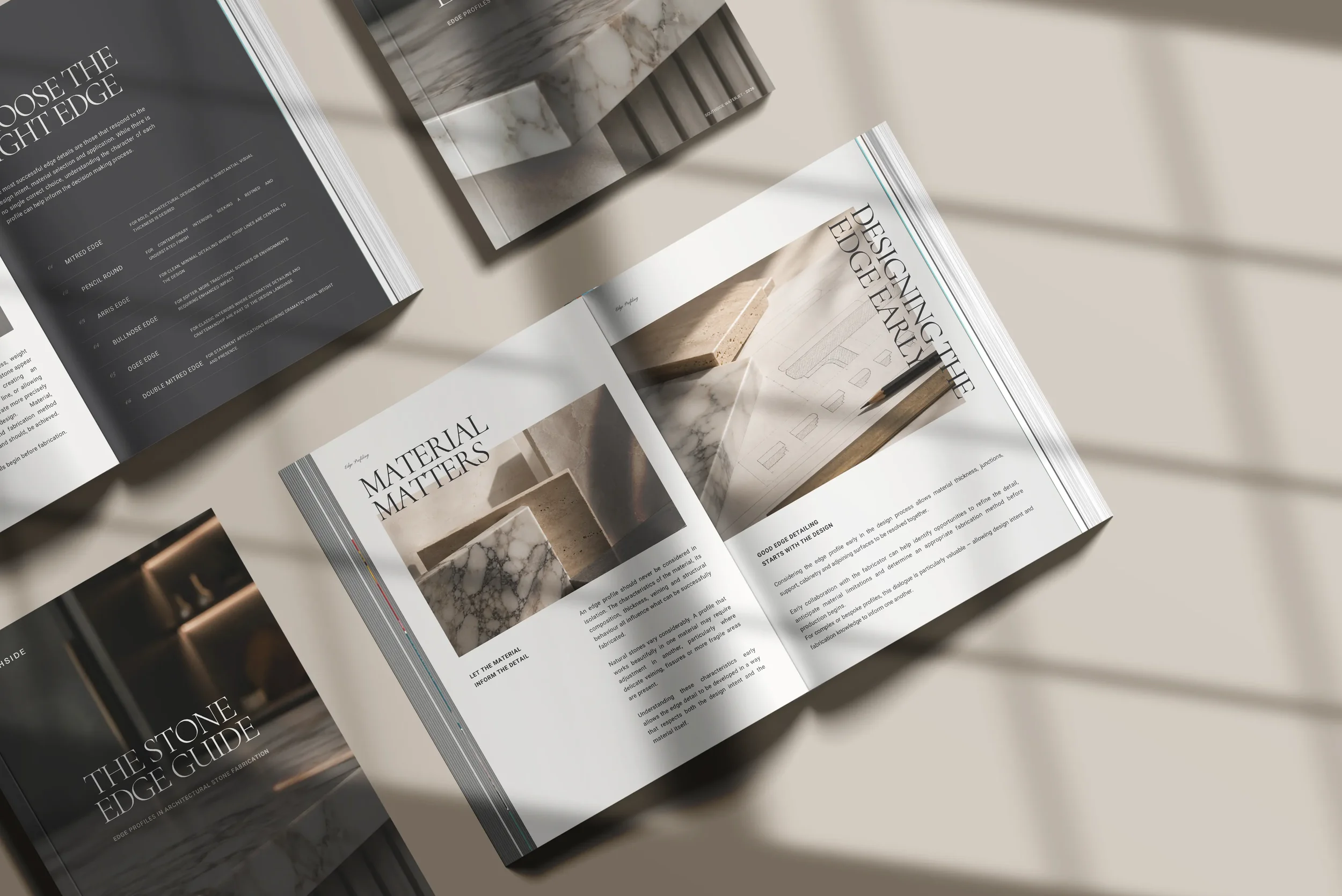
Explore the Stone Edge Profile Guide
Our Stone Edge Profile Guide brings together the most commonly specified edge details, with diagrams and practical guidance to help architects, designers and clients understand the options available.