HOW TO CHOOSE A WATERJET CUTTING PARTNER FOR ARCHITECTURAL & DESIGN PROJECTS
Choosing a reliable waterjet cutting partner for a custom design project means looking beyond cutting capability alone. Material expertise, achievable precision, CAD and technical support, fabrication experience and an understanding of the finished application can all influence the quality of the final result.
For straightforward components, supplying a finished CAD file and receiving accurately cut pieces may be all that is required.
Architectural and design projects are often different.
Complex details, unusual materials, tight tolerances and ambitious design ideas can require input long before a component reaches the waterjet. In these situations, the right fabrication partner should not only be able to cut accurately, but understand what you are trying to achieve and help determine the best way to make it.
So what should architects, interior designers and contractors look for when choosing a waterjet cutting specialist?
Look Beyond the Waterjet
Waterjet technology is capable of extraordinary precision, but the machine is only one part of the process.
The quality of the finished result depends just as much on the knowledge of the people preparing, programming and fabricating the work.
For bespoke projects, look for a company with experience beyond waterjet cutting alone. An understanding of stone fabrication, CNC machining, finishing, assembly and other specialist processes allows a fabricator to consider the complete component rather than simply the cut profile.
This becomes particularly important when a project combines different processes or materials.
The question isn't only “Can you cut this?” Often, the more useful question is “What is the best way to make this?”
Consider Their Experience With Your Material
Different materials require different approaches.
Natural stone behaves very differently from porcelain. Terrazzo introduces different considerations again, while metal, glass and composite materials each have their own characteristics and limitations.
Even within natural stone, no two materials behave exactly alike. Veining, fissures, thickness, strength and the positioning of individual components within a slab can all influence fabrication decisions. A specialist fabricator should understand the material being specified and be able to identify potential issues before production begins. Sometimes that means recommending a different cutting strategy. Sometimes it means adjusting the positioning of a component. And occasionally it means explaining why a particular detail needs to change. That advice can prevent expensive problems later in the project.
Ask About CAD and Technical Support
Not every project arrives with a production-ready drawing.
Sometimes an architect or designer has a fully developed CAD package. At other times there may be a sketch, template, drawing or concept that still needs translating into something suitable for manufacture.
A fabricator with in-house CAD and technical capability can help bridge that gap.
At Southside, we can work from existing CAD files or assist in developing information into production-ready drawings before fabrication begins.
This is particularly valuable for complex bespoke work, where seemingly small details can affect tolerances, joints, material usage or installation.
Technical input at this stage isn't about changing the design.
It is about making sure the design can be manufactured as intended.
Look for Evidence of Complex Work
A portfolio can tell you far more than a list of machinery.
Look at the type of projects a fabricator has completed and, importantly, the details within them.
Have they worked on bespoke architectural components?
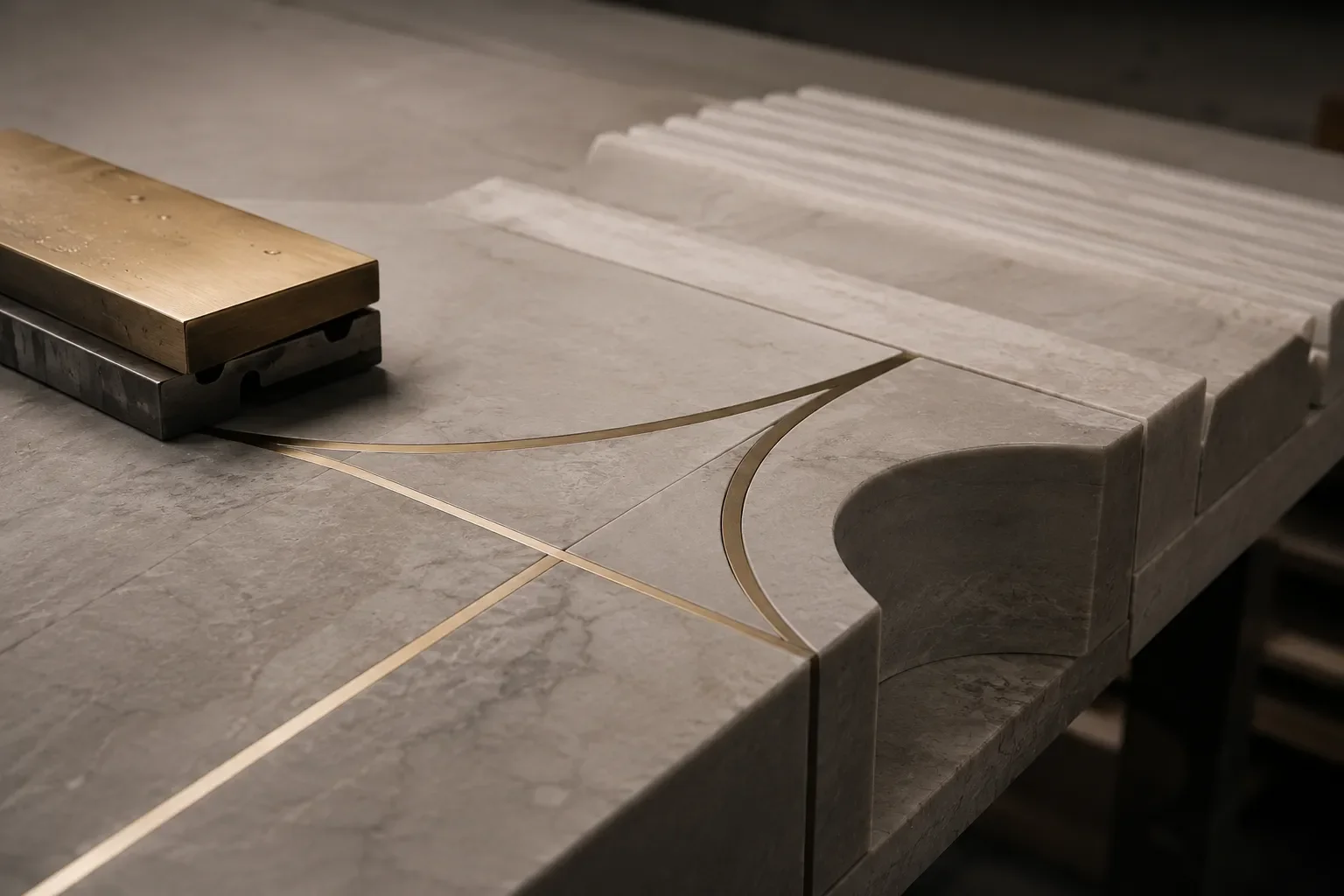
Can they demonstrate precision inlays, intricate flooring, complex stonework, signage, sculptural elements or components requiring several fabrication processes?
Do their projects show experience working with architects, interior designers, artists and specialist contractors?
Complex completed work demonstrates something that a machinery list cannot: the ability to solve problems when a project doesn't follow a standard manufacturing route.
Accuracy Matters — But So Does Understanding Tolerances
Waterjet cutting is known for precision, but architectural fabrication isn't simply about achieving the smallest possible tolerance.
The important thing is understanding which tolerances matter and why.
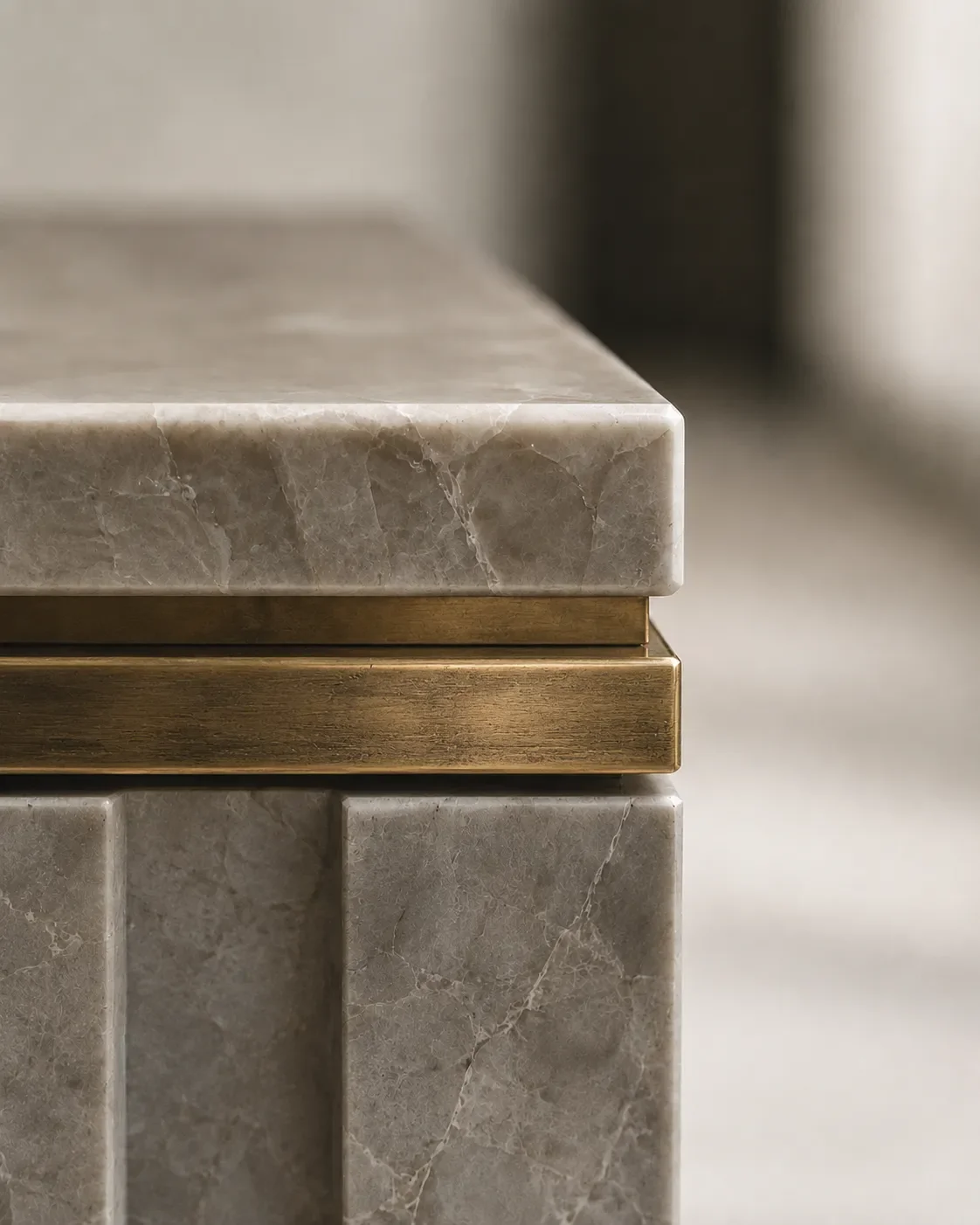
A brass inlay sitting within a stone surface has different requirements from a large-format flooring component. A piece being integrated into joinery may need to coordinate precisely with another trade. Bookmatched stone components may require positioning to be considered alongside cutting accuracy.
A good fabrication partner should understand how an individual component relates to the wider installation.
Precision should serve the finished project, rather than simply being a number on a specification sheet.
Communication Is Part of Fabrication
Some of the most expensive fabrication problems begin with assumptions.
A drawing is interpreted differently. A material behaves unexpectedly. An installation constraint isn't identified until components reach site.
Good communication throughout the fabrication process reduces those risks.
For bespoke projects, you should be able to discuss technical details with people who understand both the drawings and the practicalities of manufacture.
If something presents a problem, you want to know about it before fabrication — ideally alongside a potential solution.
That relationship becomes increasingly important as the complexity of the project increases.
Consider Whether They Can Support the Wider Fabrication
Waterjet cutting may be central to a project without being the only process required.
A component might need CNC machining after cutting. Stone may require shaping, edge detailing or hand finishing. An inlay may combine stone with brass or stainless steel. Individual pieces may need to be assembled or prepared in a particular sequence for installation.
Working with a fabricator capable of considering these processes together can simplify production and help maintain consistency across the finished work.
It also allows decisions to be made around the needs of the complete component rather than an isolated manufacturing stage.
Involve Your Fabricator Early
Perhaps the most useful thing you can do when planning a complex fabrication project is speak to your fabricator before every detail has been fixed.
Early involvement doesn't mean handing over creative control.
Quite the opposite.
It gives the fabrication team an opportunity to understand the design intent, identify potential challenges and suggest ways of achieving difficult details while there is still flexibility to make good decisions.
Material selection, slab layout, joints, tolerances, fixing methods and fabrication sequences can all be considered before they become problems.
The objective should always be to protect the original design intent while finding the most effective way of turning it into physical form.
Choosing the Right Fabrication Partner
For simple waterjet cutting, capability, accuracy and turnaround may be enough to make a decision.
For bespoke architectural and design projects, there is more to consider.
Look for a partner with material knowledge, CAD and technical capability, evidence of complex fabrication and the willingness to engage with the project rather than simply process a drawing.
The best fabrication relationships are collaborative.
Architects, designers and artists bring creative intent. Fabricators bring an understanding of materials, manufacturing processes and the practical knowledge required to translate those ideas into physical components.
When those disciplines work together, waterjet cutting becomes more than a production process.
It becomes one of the tools through which ambitious design can be realised.
Planning a Bespoke Fabrication Project?
Southside works with architects, interior designers, artists and contractors on projects requiring precision waterjet cutting, CAD support and specialist fabrication.
Whether you have production-ready drawings or an idea that still needs technical development, our team can help determine the most effective route from concept to fabrication.