MIXED MATERIALS: DESIGNING STONE METAL AND OTHER SURFACES TO WORK TOGETHER
Some of the most interesting architectural details happen where one material meets another.
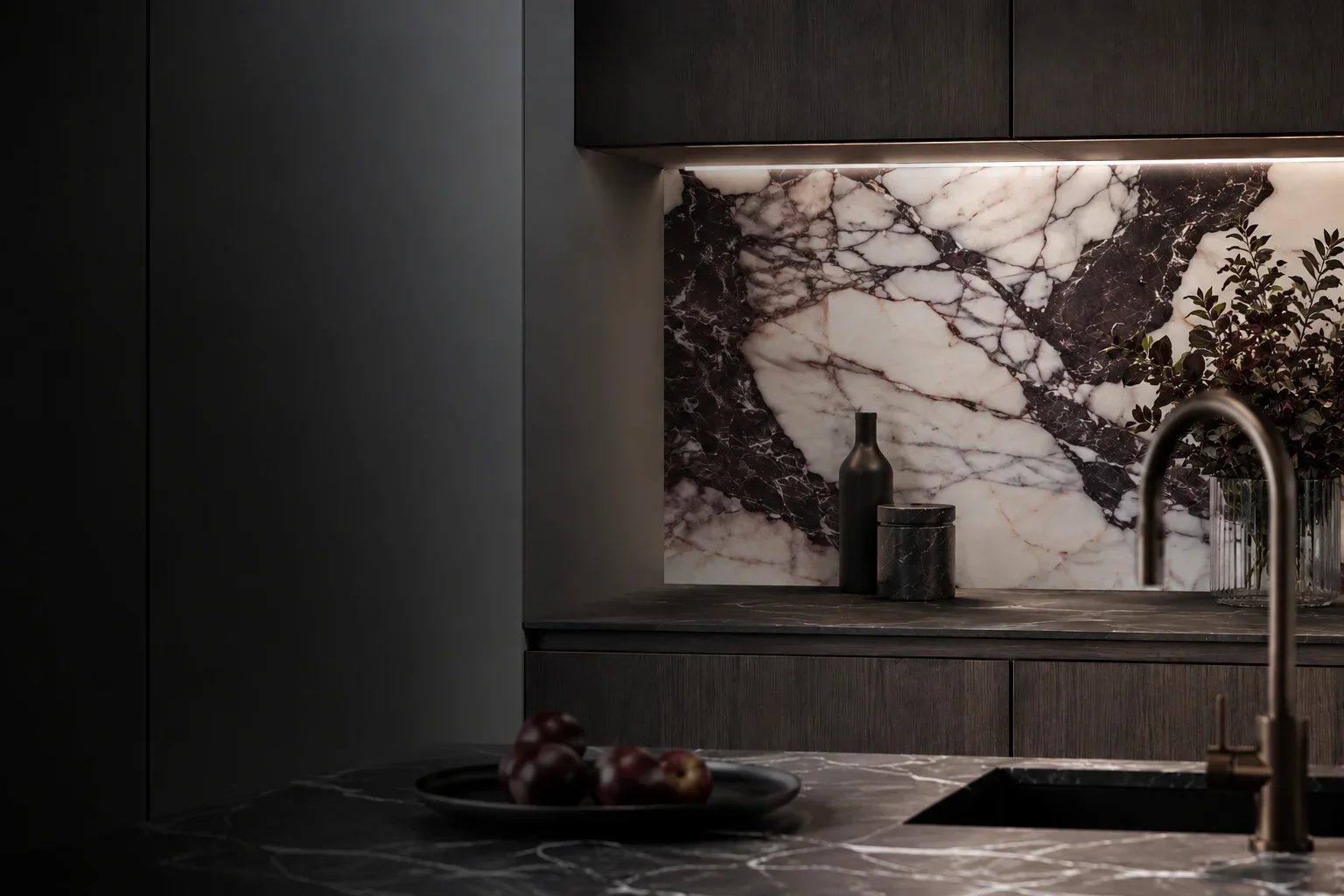
Stone alongside metal. Porcelain integrated with joinery. Brass set flush into a surface. Terrazzo cut precisely to receive stainless-steel lettering. Different materials can bring contrast, texture and depth to a design, but combining them successfully requires more than simply selecting materials that look good together. Each material behaves differently. Each has its own tolerances, limitations and fabrication requirements. And often, the success of a mixed material design is determined by what happens where those materials meet.
The Detail Is in the Junction
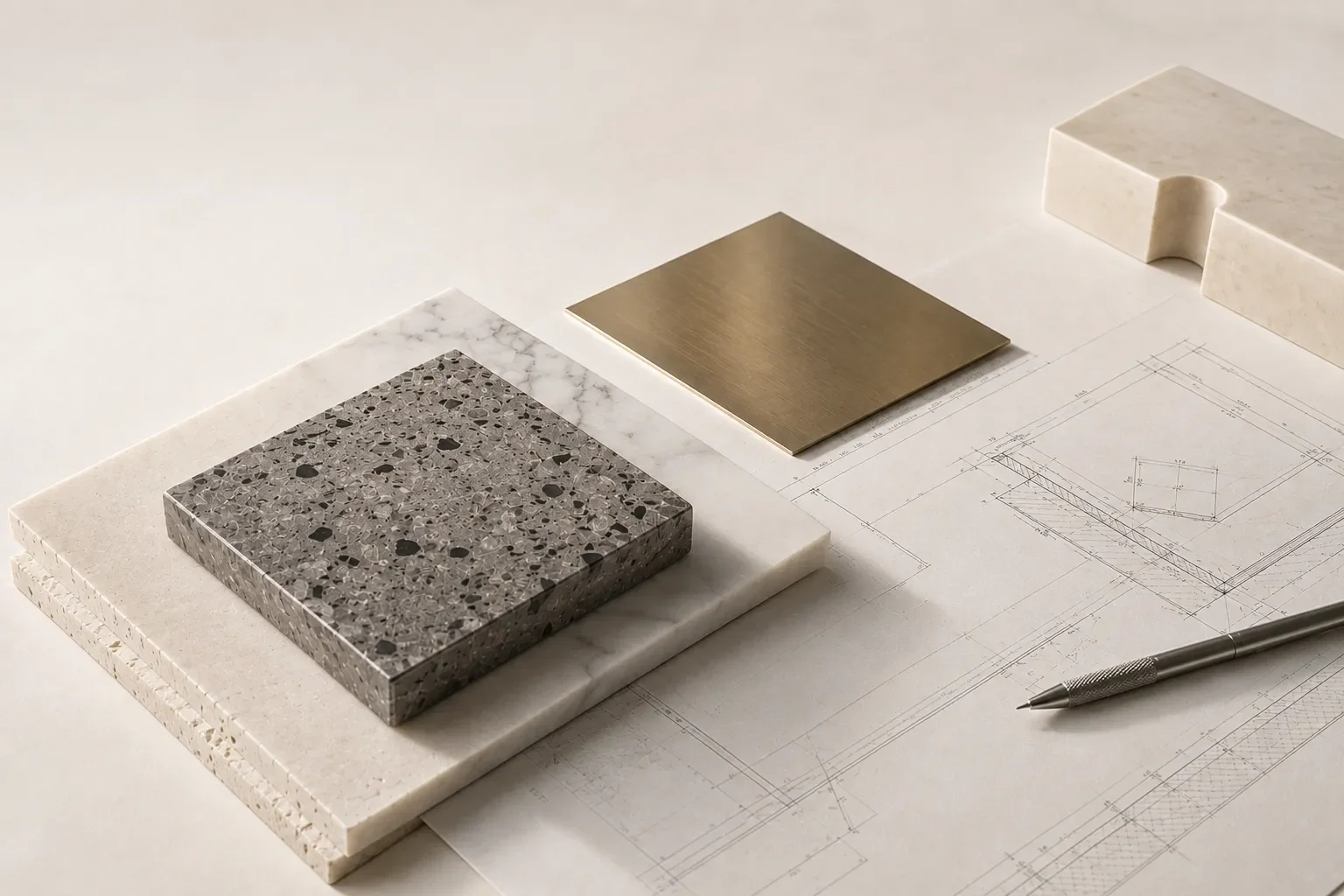
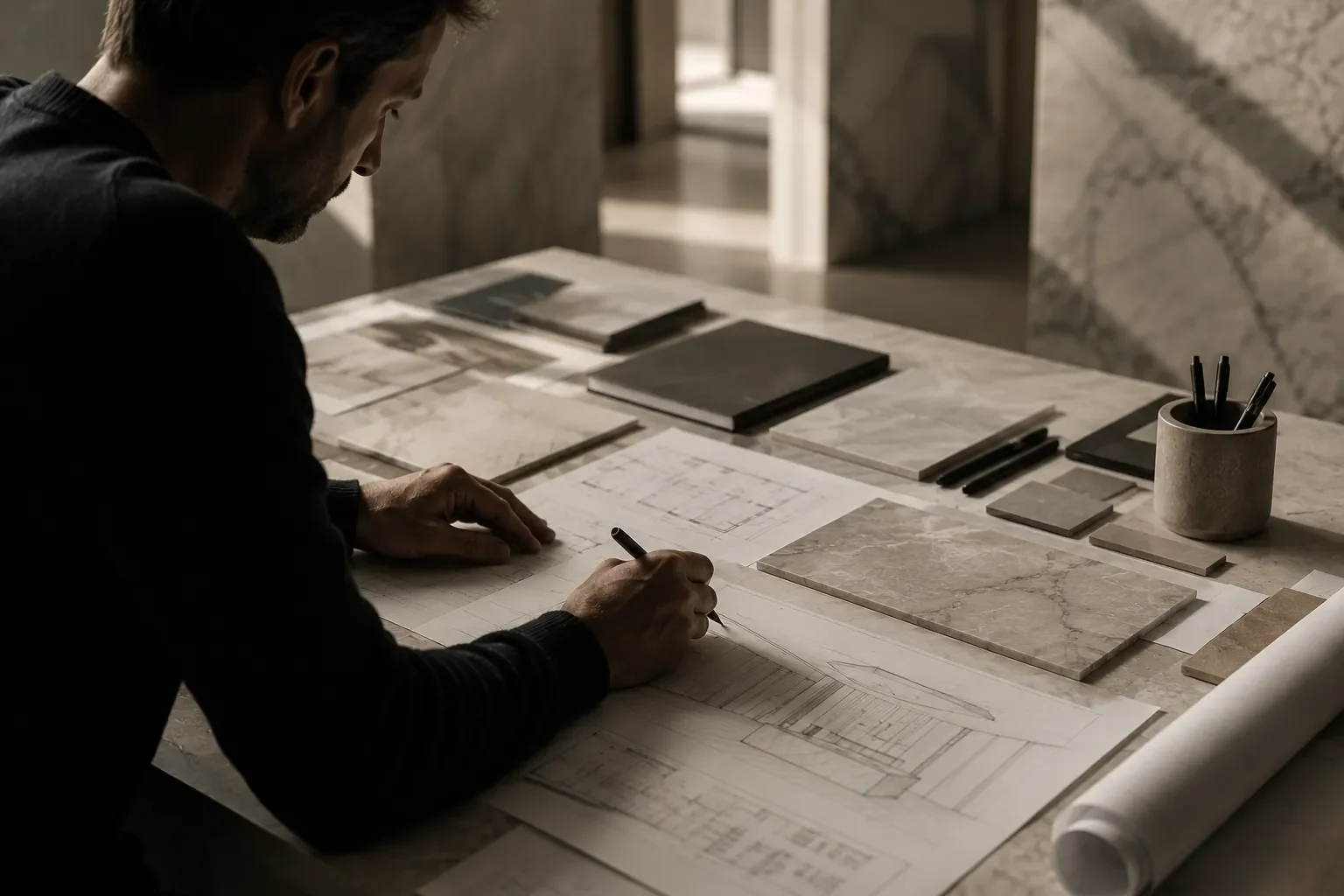
On a drawing, the meeting point between two materials may appear as little more than a line. In fabrication, that line can represent a considerable amount of thought. Material thicknesses need to be understood. Tolerances need to be allowed for. Fixing methods, movement, edge profiles and installation sequences all need to be considered.
If two surfaces are intended to sit flush, for example, the fabrication tolerances of both materials become important. A small discrepancy in thickness or positioning can become immediately visible once the components are installed. The cleaner the intended detail, the more precise the coordination often needs to be.
Stone and Metal
Metal can provide a particularly effective contrast against natural stone, terrazzo and other architectural surfaces. Brass brings warmth and richness, while stainless steel can create a sharper, more contemporary finish. Both can be used for lettering, logos, decorative inlays and bespoke detailing.
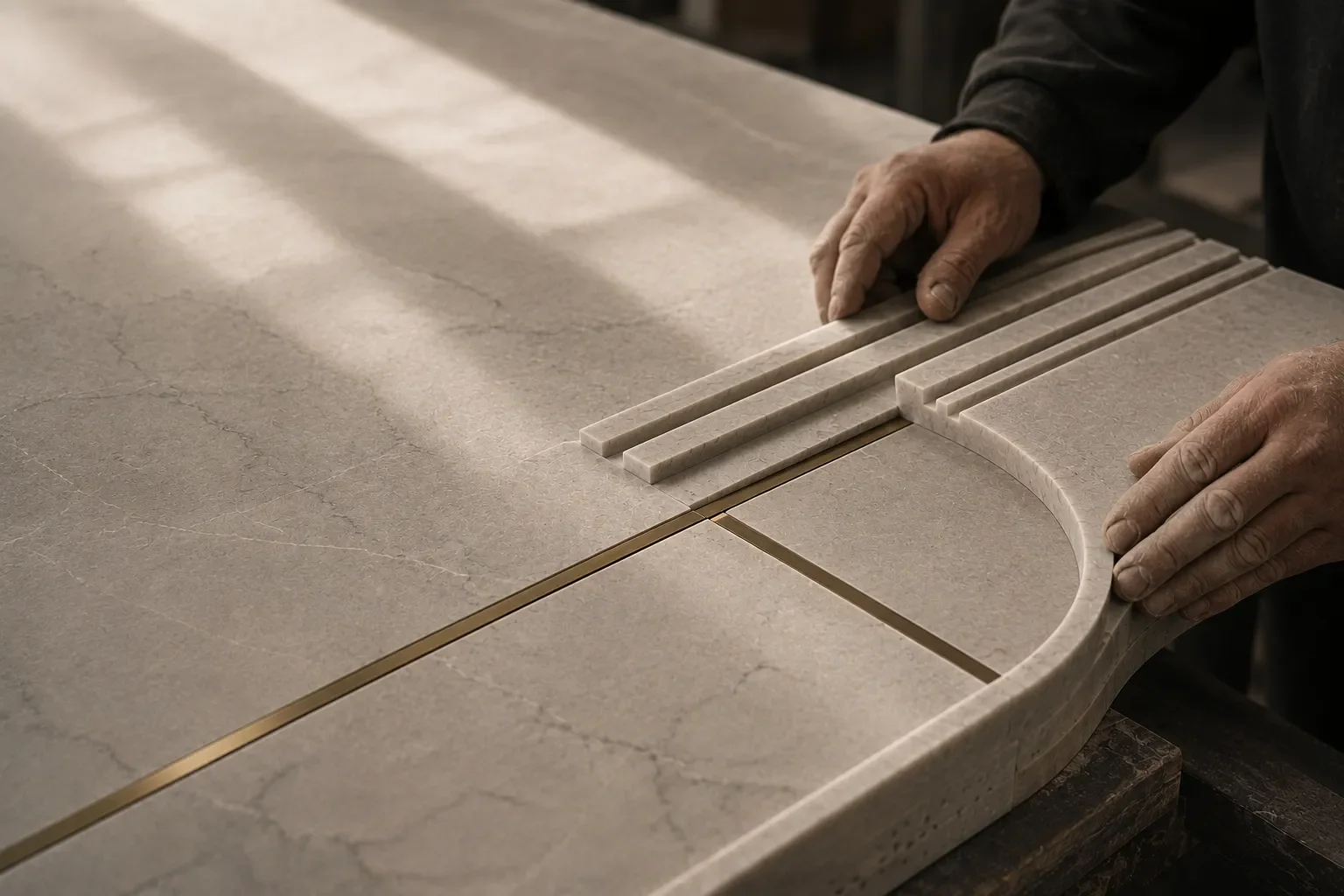
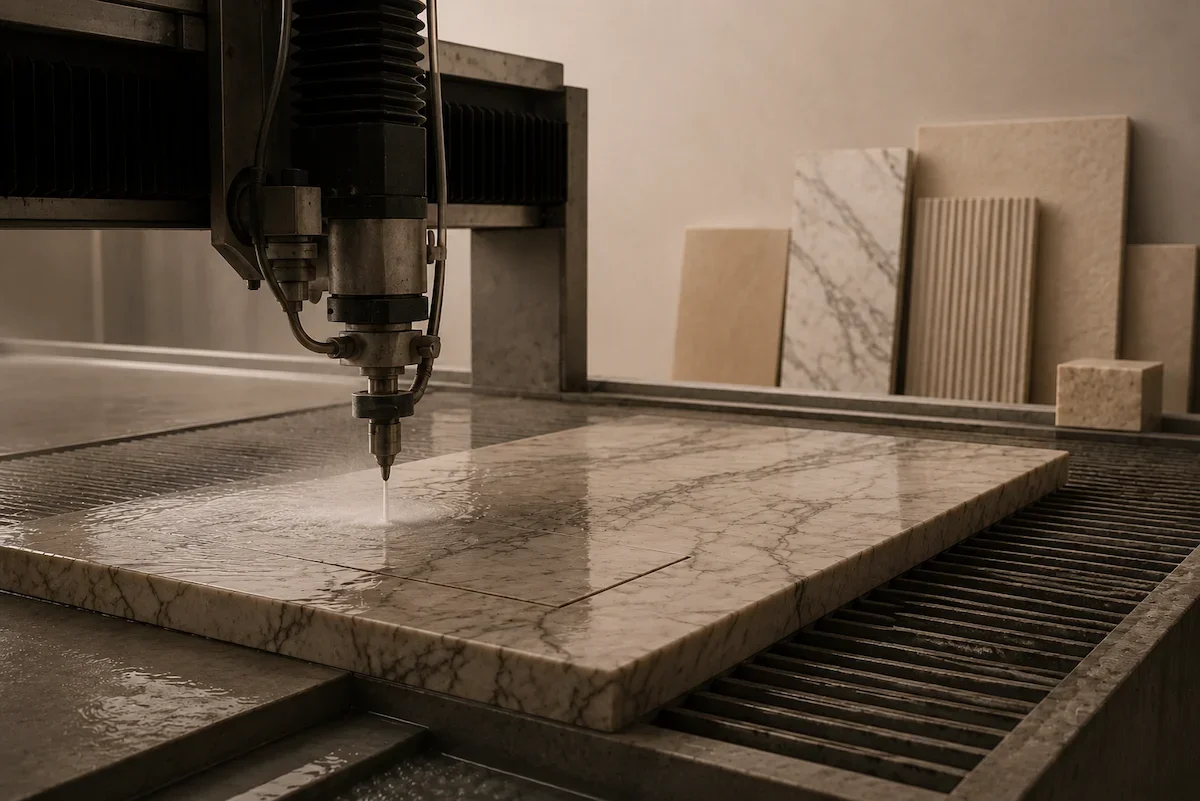
At Southside Waterjet, we have used precision waterjet cutting to create recesses within stone and terrazzo designed specifically to receive metal components. For Lululemon on Regent Street, stainless-steel lettering was integrated into 20mm terrazzo. For Hobbs London, brass logo detailing was incorporated into the floor design. Although the finished detail can appear deceptively simple, achieving a clean result relies on accurate coordination between the cut material and the component being inserted into it. The recess, the metal and the surrounding surface all need to work as one detail.
When Metal Becomes Part of the Surface
Not every metal detail is created from a separate solid component.
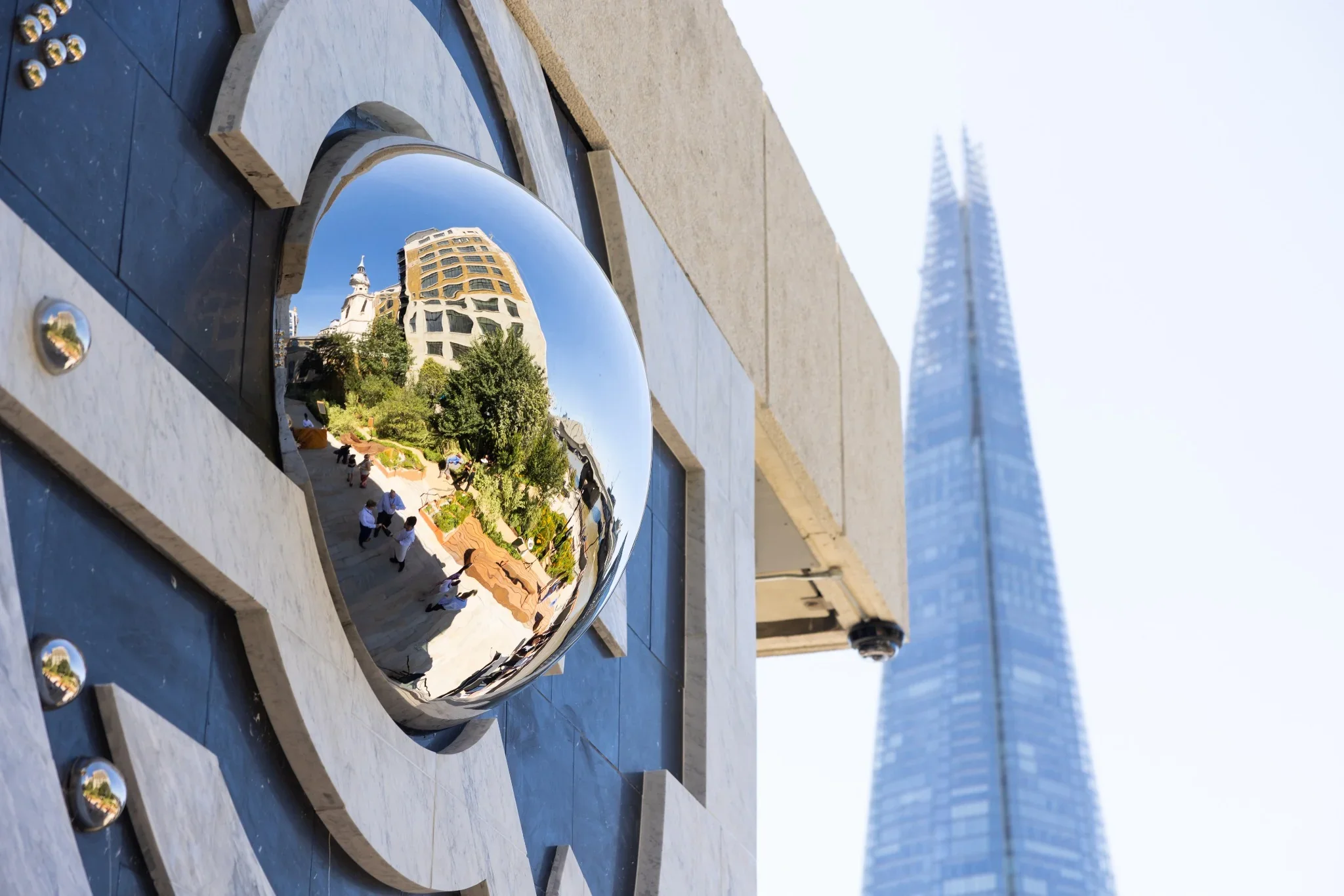
For CHRONOS, the permanent public artwork by George Henry Longly, brass detailing was created through a very different fabrication process.
A vinyl plotter was used to cut a rubber sandblasting mask, which was applied to the stone before the surface was sandblasted to create a recessed pattern. Brass powder mixed with epoxy resin was then introduced into the relief before being honed by hand to create a smooth finished surface.
The result is a metal detail that feels embedded within the stone rather than simply applied to it.
It is a good example of how material combinations can influence the fabrication process itself.
Stone and Joinery
The relationship between stone and joinery is equally important.
Reception desks, bars, kitchens, vanity units and bespoke furniture frequently combine fabricated stone components with timber or manufactured cabinetry.
These elements may be produced by different specialists, sometimes in different workshops, before eventually coming together on site. That makes coordination essential. Dimensions, finished levels, support requirements, fixing positions and tolerances all need to be understood before fabrication begins.
Where stone wraps around joinery or forms a continuous surface across several components, even small discrepancies can affect the finished alignment. Digital templating, accurate drawings and communication between trades can make an enormous difference.
Different Materials Behave Differently
Mixed material detailing also requires an understanding that materials cannot always be treated in the same way.
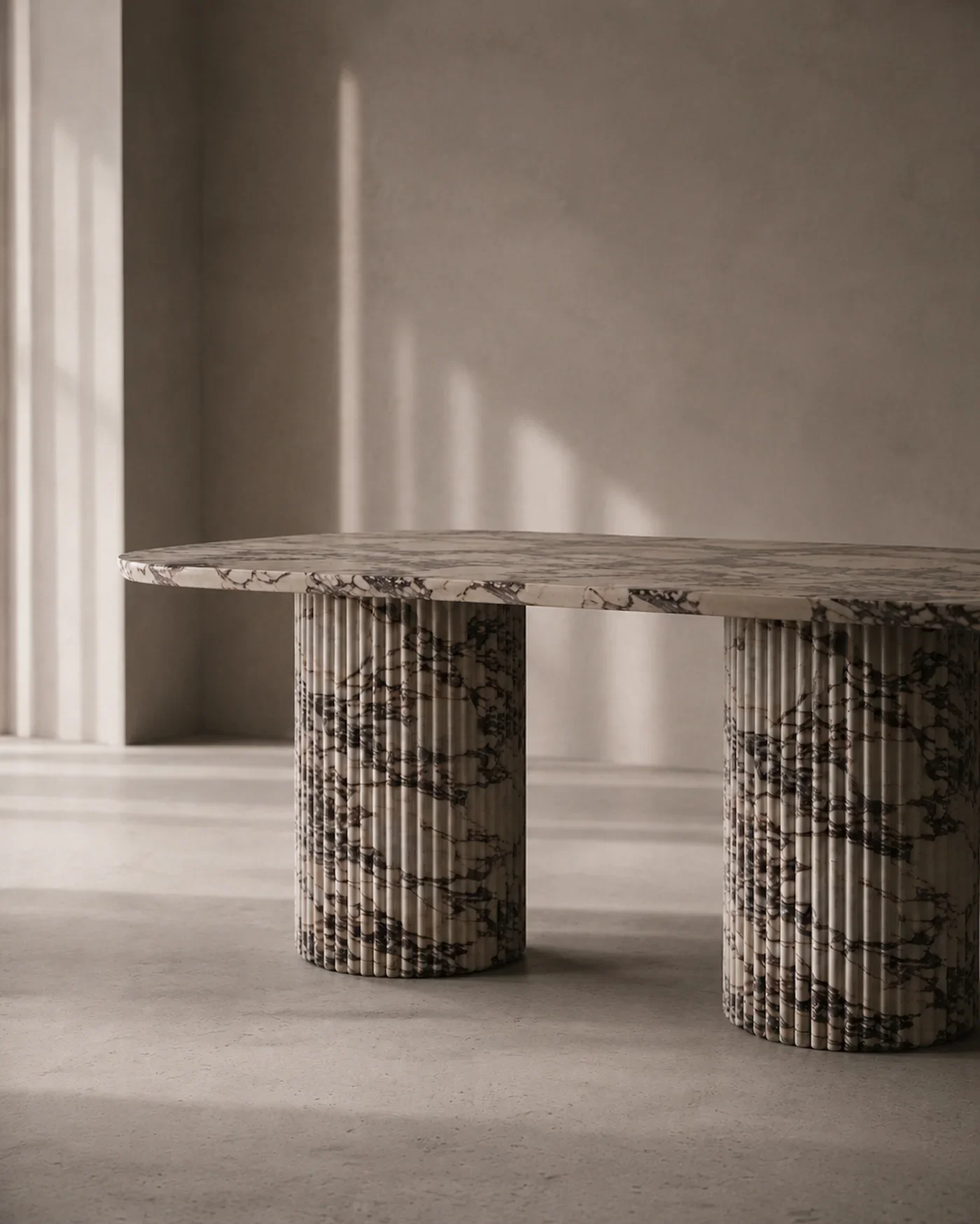
Natural stone, porcelain, terrazzo, technical stone, metal and timber each respond differently to cutting, machining, handling, fixing and environmental conditions. Natural stone itself varies considerably. Veining, fissures and mineral composition can influence how a slab behaves during fabrication. Porcelain presents different challenges because of its density and relatively brittle nature. Technical surfaces have their own fabrication requirements, while metals introduce another set of tolerances and finishing considerations.
A detail that works perfectly in one material may therefore need to be reconsidered when specified in another. Understanding those differences early can prevent a visually simple design from becoming unnecessarily difficult, or impossible, to manufacture.
Designing the Transition
Sometimes the most successful mixed material details are not those that attempt to disguise the junction. Instead, the transition becomes part of the design.
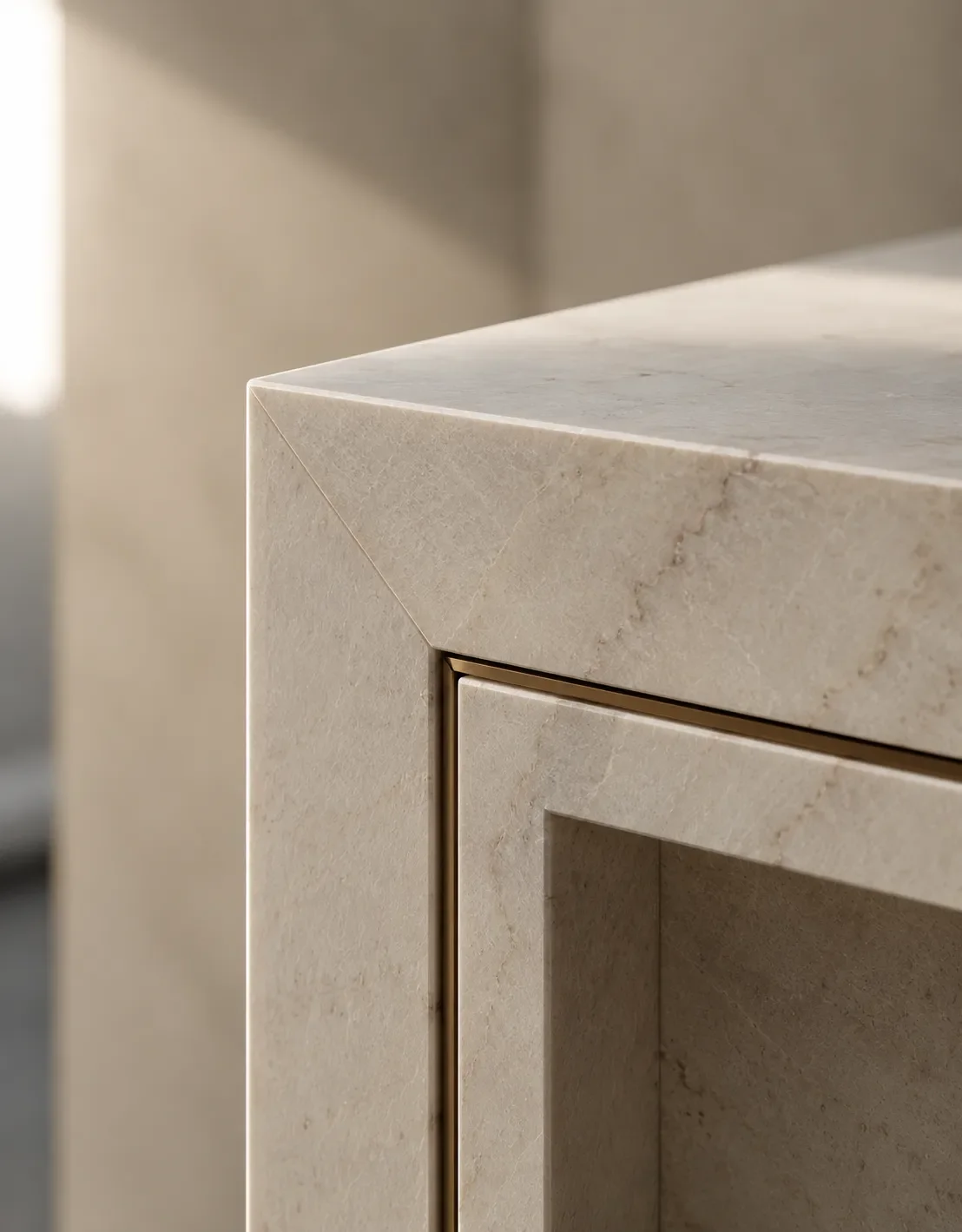
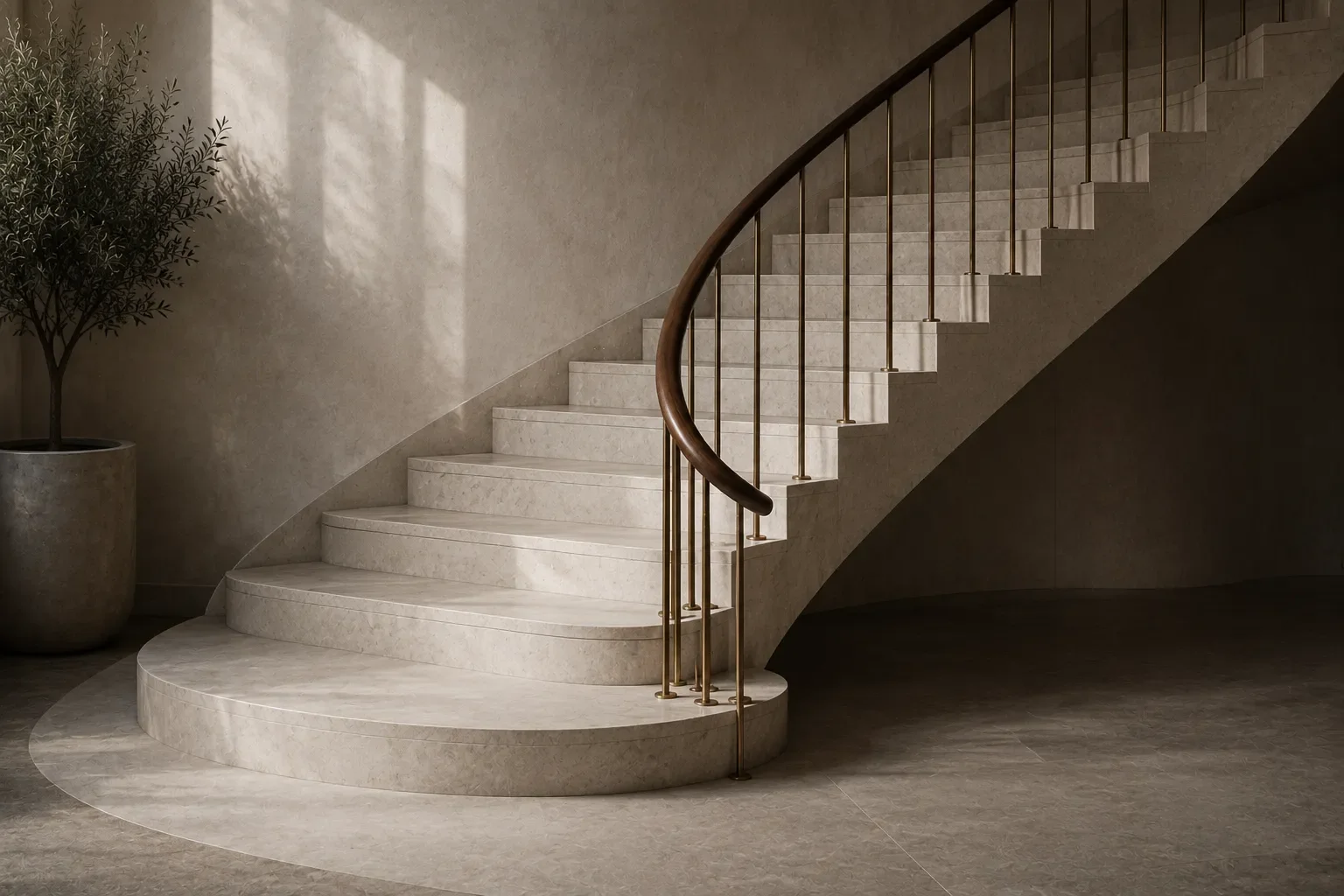
A shadow gap can create a deliberate separation between materials. A metal trim can define an edge. A mitred stone return can conceal the thickness of a slab. An inlay can transform the junction into a decorative feature. These decisions may appear small within the context of an entire interior or architectural scheme, but they can have a significant impact on how resolved the finished project feels.
Good detailing considers not only the individual materials, but the relationship between them.
Designing for Fabrication
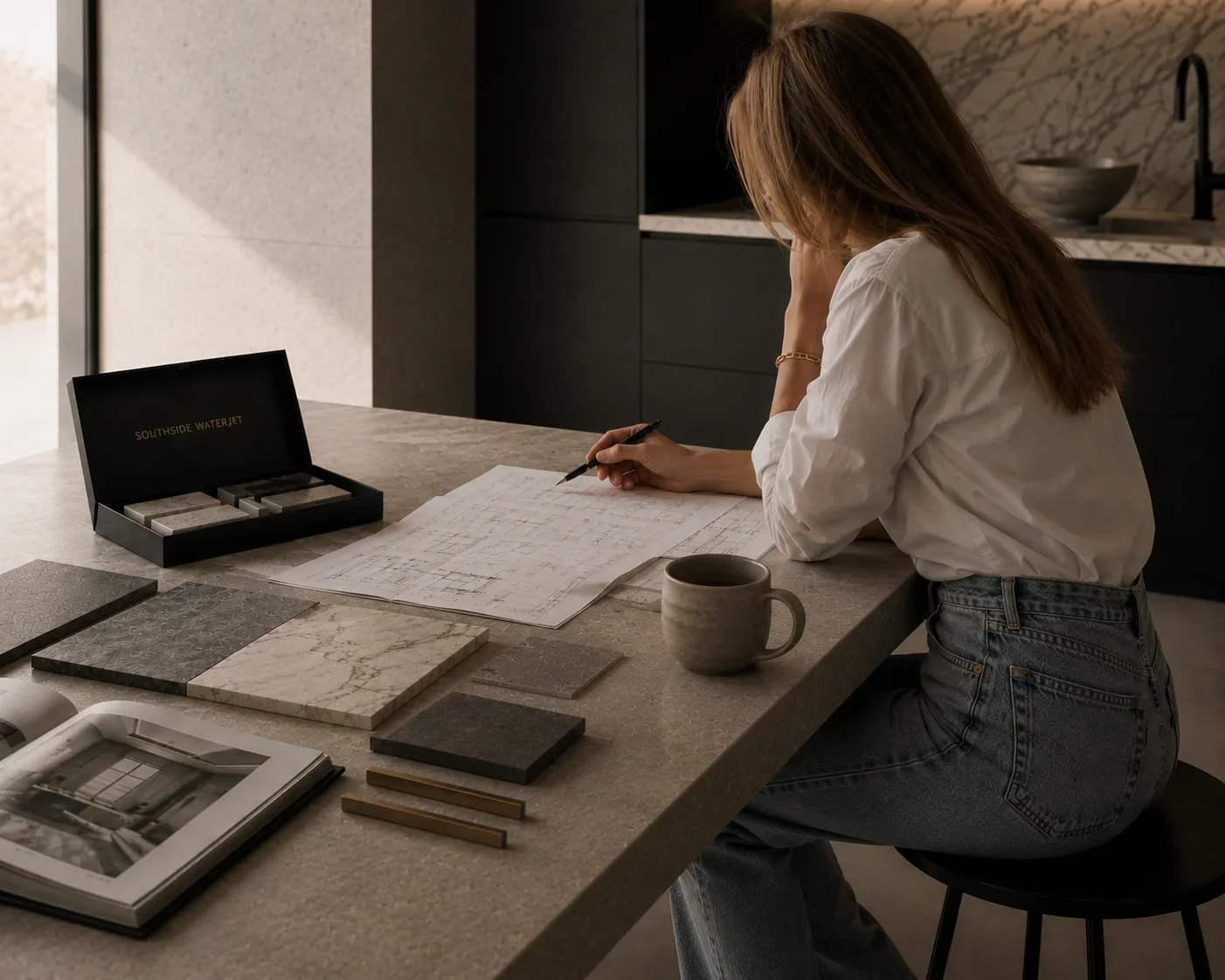
Increasingly ambitious material combinations make early conversations between designers, fabricators, joiners, metalworkers and installers valuable.
A fabricator can often identify potential issues before materials are ordered or components are manufactured.
Can the proposed radius be achieved?
Is there sufficient material around an inlay?
How will the component be supported?
Can the desired edge profile be fabricated at the specified thickness?
What tolerance is required for another material to fit correctly?
Answering these questions during design development creates far more opportunity to refine a detail than discovering them once fabrication has begun. It can also open up possibilities. Understanding how something will be made does not necessarily restrict a design. Often, it allows the original idea to be developed into something more considered and more achievable.
Precision in the Details
Mixed material design is ultimately about relationships. The contrast between polished stone and brushed metal. The warmth of brass against marble. The alignment between a fabricated surface and bespoke joinery. The transition from one texture to another. But behind those visual relationships is a technical one. Different materials need to be understood, fabricated and coordinated so that when they finally come together, the complexity behind the detail disappears. The finished result should simply feel intentional.And very often, that begins long before anything reaches the workshop.
Planning a mixed material detail?
From stone and metal inlays to integrated joinery and bespoke architectural details, early fabrication input can help turn ambitious concepts into buildable solutions.