THE MAKING OF CHRONOS
Created by British artist George Henry Longly, CHRONOS is a large-scale permanent artwork forming part of the façade at Fresh Wharf in London.
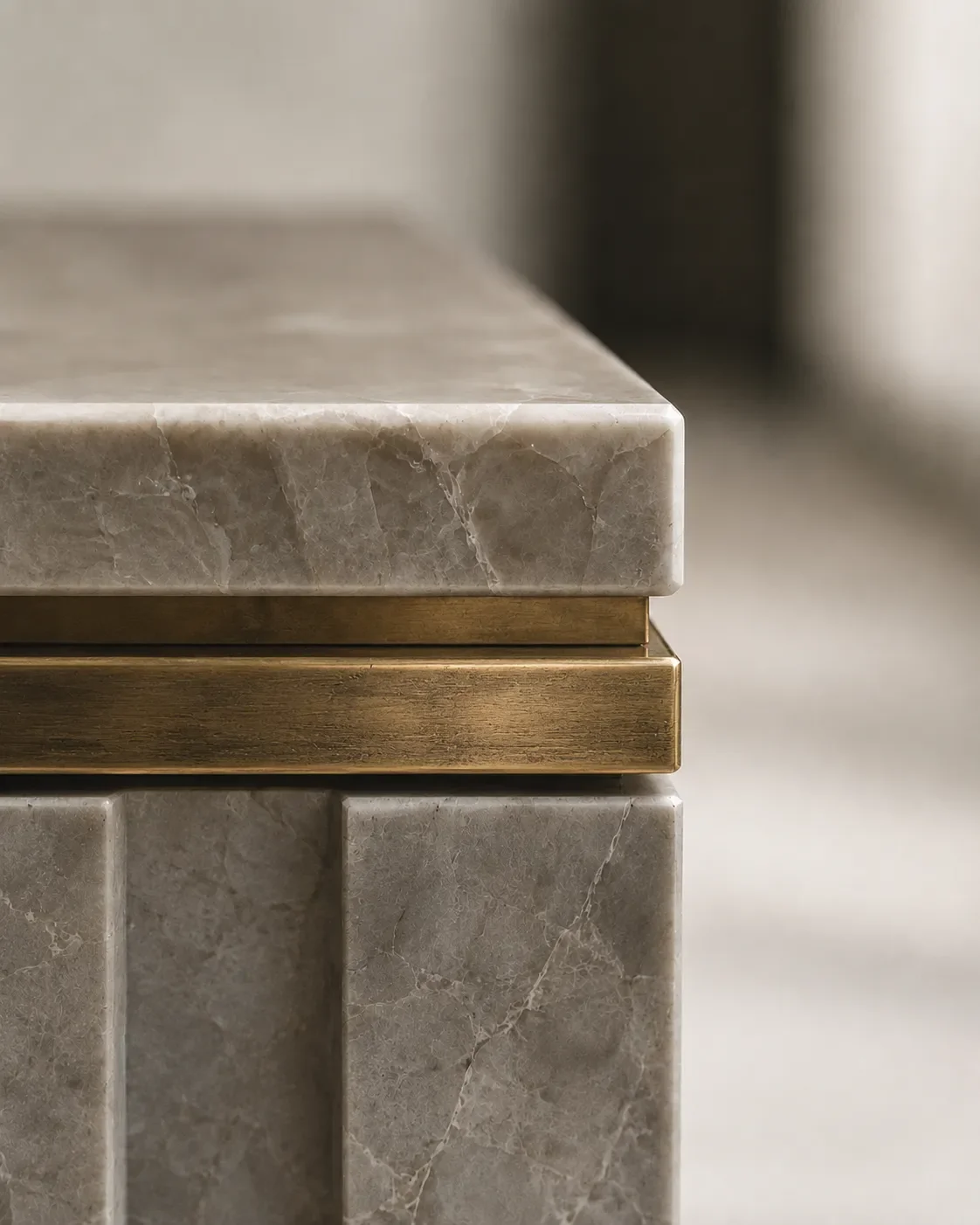
Working across stone, marble, brass and polished stainless steel, the artwork brings together geometric forms, carved and textured surfaces and reflective elements within an intricate architectural composition.
Southside Waterjet was responsible for translating elements of Longly's design into fabricated stone components, from the preparation of digital files and precision waterjet cutting through to shaping, grinding and hand finishing.
This article follows that process, from the original artwork and technical drawings through to fabrication and installation.
From Artwork to Fabrication
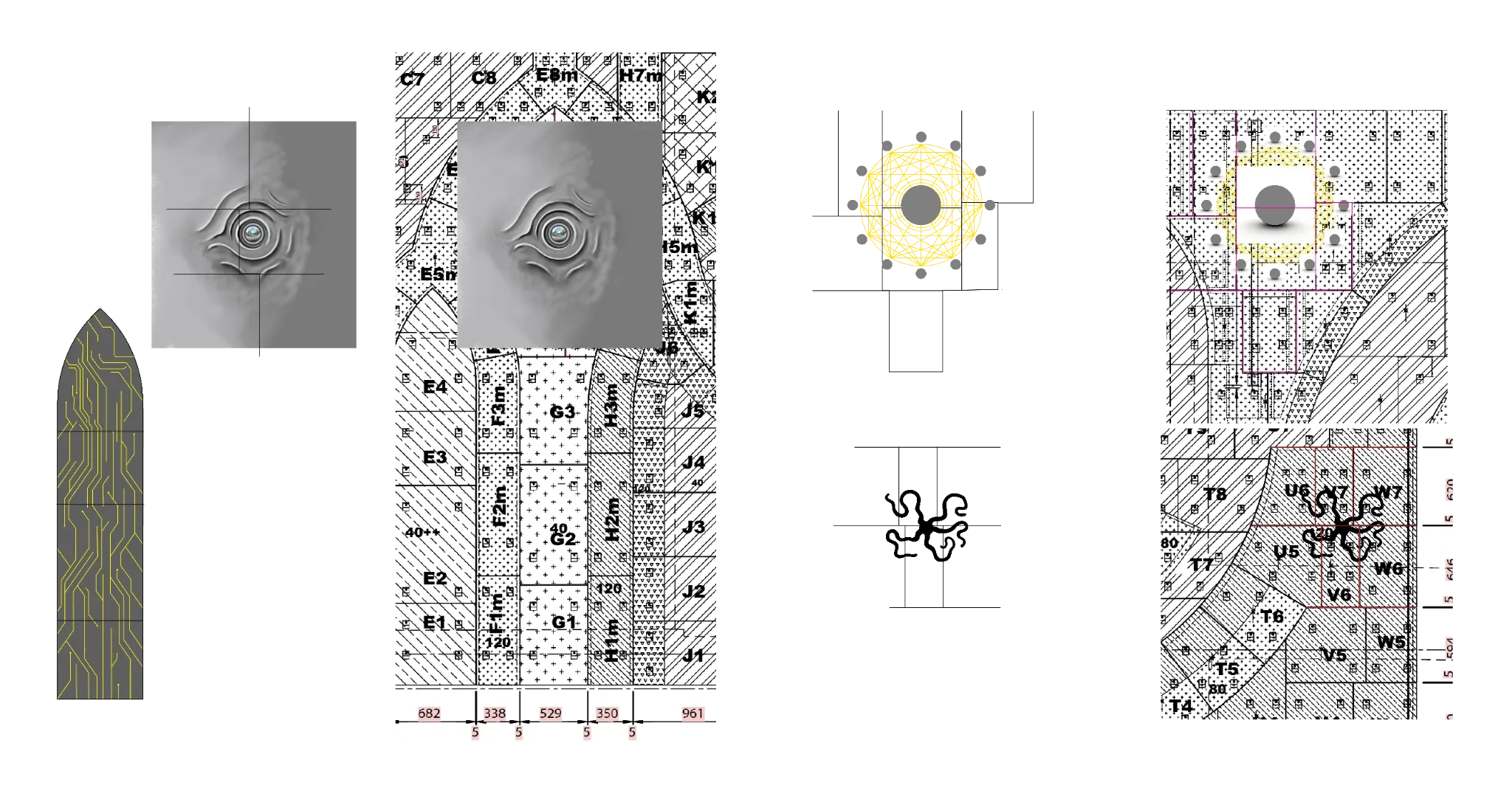
Before fabrication could begin, Longly’s artwork had to be translated into information that could be used to manufacture the individual stone components.
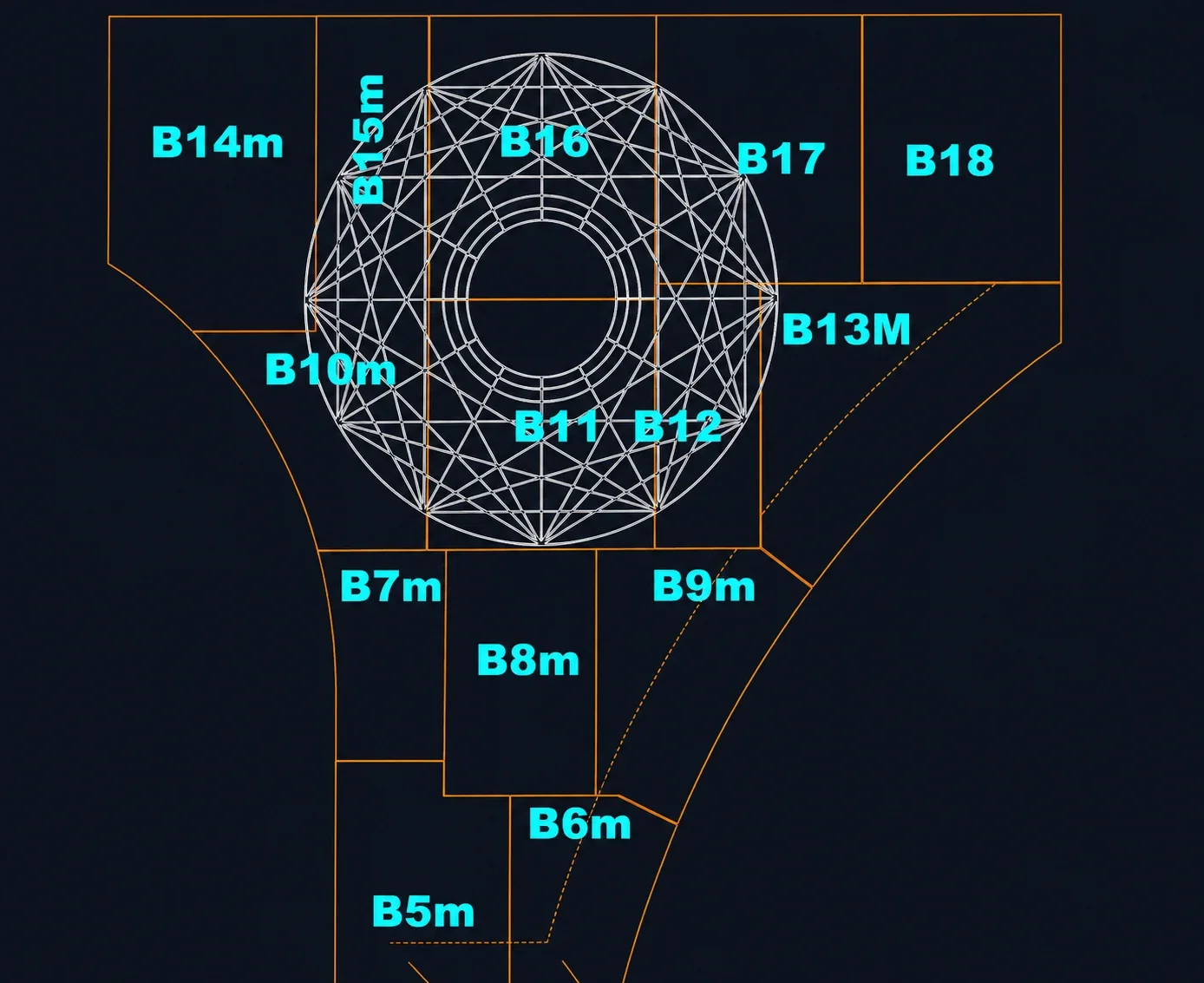
The original geometry was developed digitally before being transferred into CAD, where the composition was mapped across the façade and broken down into individual pieces. This allowed the team to establish how the artwork would be divided across the stone, while accounting for scale, joints and the practical requirements of fabrication and installation.
From these files, the individual profiles could then be prepared for waterjet cutting and the subsequent stages of shaping and finishing.
Precision Waterjet Cutting
Waterjet cutting was used to create the complex profiles and geometric forms that define CHRONOS. Working from the prepared digital files, the individual stone components could be accurately cut before moving through the subsequent stages of shaping, grinding and hand finishing.
Pre-Shaping & Grinding
Before the final hand-finishing could begin, a number of the stone elements required substantial pre-shaping to establish their underlying form.
For the curved columns, a CNC saw was used to rout a series of dished sections into the stone, progressively removing material to create the required curved profiles. The individual sections were carefully laid out and bookmatched across the slab so that the natural veining remained aligned as the stone transitioned around each column.
Once the primary forms had been established, further grinding and shaping was carried out by hand, refining the profiles and preparing the stone for its final finish.
This combination of CNC machining, considered slab layout and hand finishing allowed the complex three-dimensional forms to be created while preserving the natural movement and continuity of the stone.
Brass Inlay
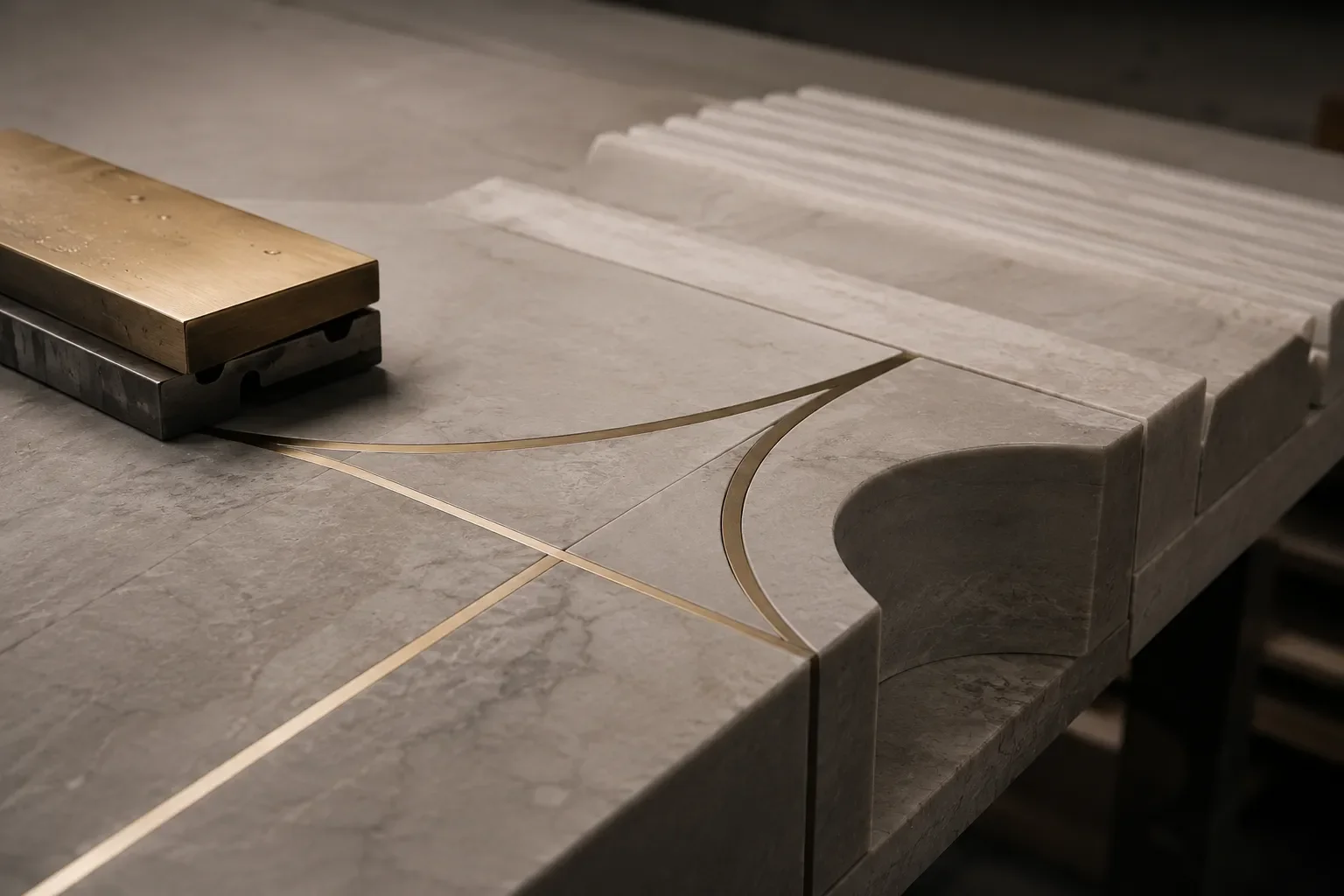
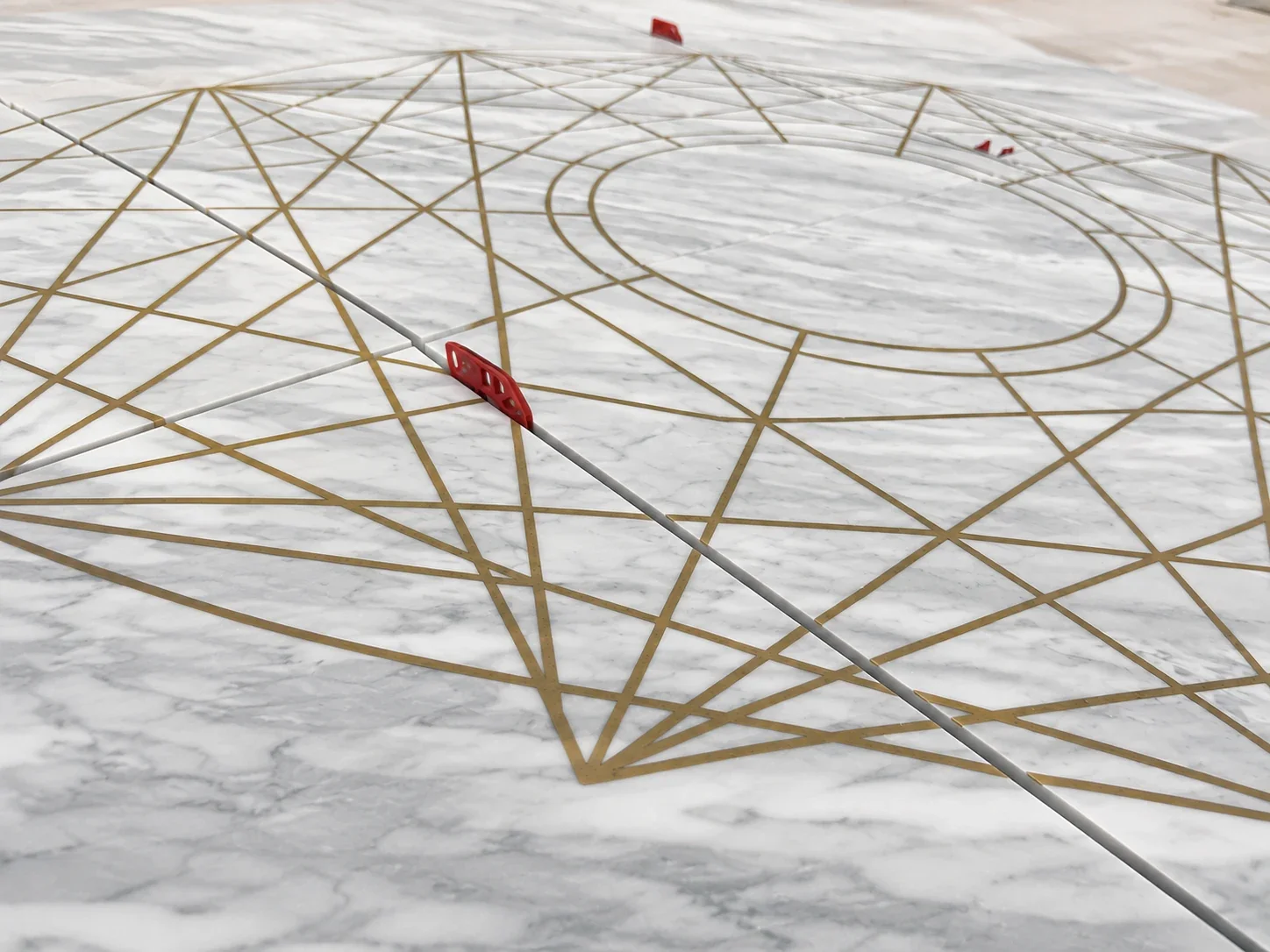
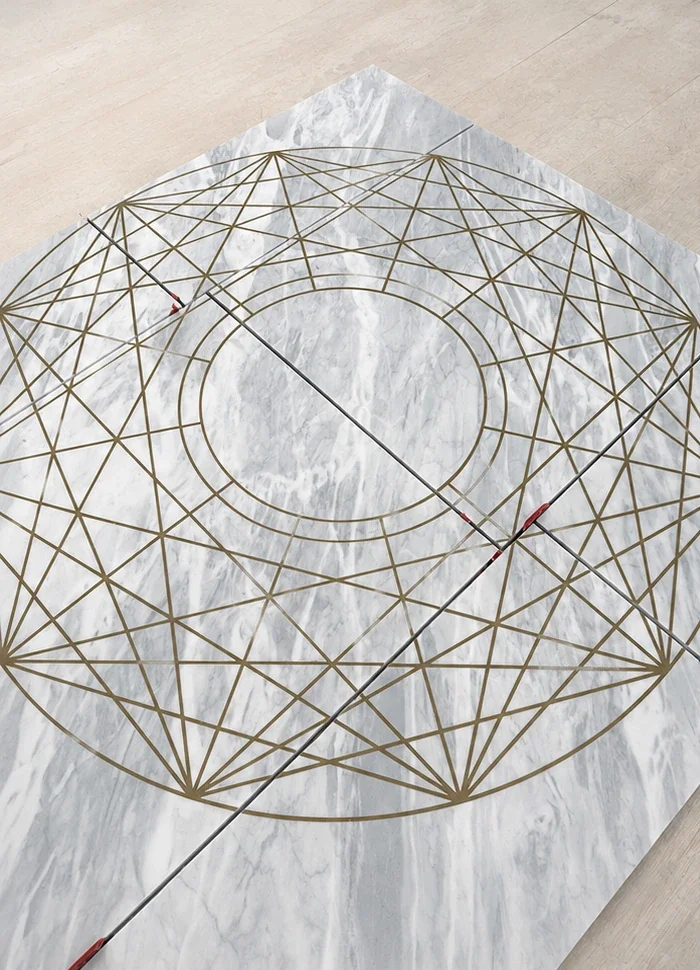
The intricate brass detailing within CHRONOS was created through a combination of digital plotting, sandblasting and hand finishing.
A vinyl plotter was used to cut a rubber sandblasting mask from the digital artwork, which was then carefully applied to the surface of the stone. The exposed areas were sandblasted to create a recessed pattern, accurately transferring the fine geometric linework into the material.
The recessed design was then filled with brass powder combined with epoxy resin. Once cured, the surface was honed by hand, removing the excess material and bringing the brass detailing flush with the surrounding stone.
The result is a finely defined brass inlay that follows the complexity of the original artwork while sitting seamlessly within the finished stone surface.
Hand-Worked Finishes
Not every element of CHRONOS was intended to have a precisely machined finish.
Areas of the stone were deliberately worked by hand, with chiselling used to roughen and mark the surface. The irregularity created through this process introduces texture and variation into the material, providing a deliberate contrast to the clean geometry of the waterjet-cut components.
These hand-worked surfaces form an important part of the character of the finished artwork, allowing evidence of the making process to remain visible within the stone.
From Workshop to Installation
Once fabricated and finished, the individual components were transported to Fresh Wharf and assembled as part of the building façade.
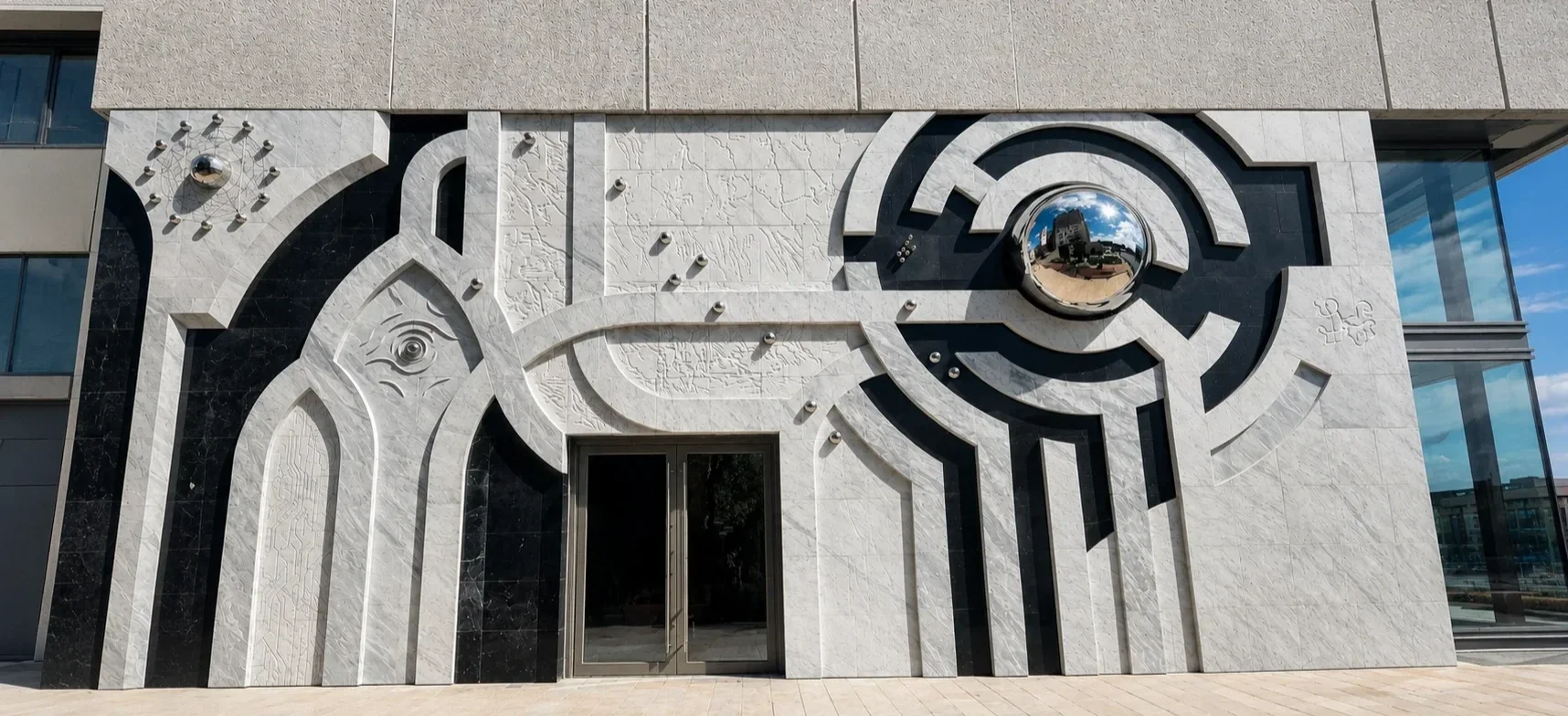
At this scale, the artwork reveals the relationship between the individual pieces: sweeping stone forms, dark contrasting sections, textured surfaces and polished metal elements combine to create a single composition across the elevation.
The installation stage brought together the different fabrication processes undertaken in the workshop, transforming a collection of individually worked components into Longly’s completed CHRONOS artwork.
The Completed Artwork
Now installed at Fresh Wharf on the banks of the River Thames, CHRONOS forms a permanent part of the architecture and public realm.
The finished piece demonstrates how digital fabrication, waterjet cutting and traditional hand-working techniques can be used together to realise an artist’s work in stone at architectural scale.
Want to see how it all came together?
See the completed CHRONOS installation at Fresh Wharf, where precision-cut stone, hand-worked surfaces and contrasting materials come together at architectural scale.