FROM DESIGN INTENT TO FABRICATION: WHY EARLY COLLABORATION MATTERS
The most successful fabrication projects rarely begin with a finished drawing and a request for a price.
They begin with a conversation.
When specialist fabricators are involved early, they can help translate design intent into something that works materially, structurally and visually. Details can be refined before they become problems, fabrication possibilities can be explored and the original ambition of the design can be protected throughout production.
For architects and designers, this early exchange is not about compromising an idea. It is about understanding how to realise it well.
Fabrication is part of the design process
A drawing may communicate the intended form, proportion and finish of a piece, but it cannot always account for the behaviour of the material or the practical realities of production.
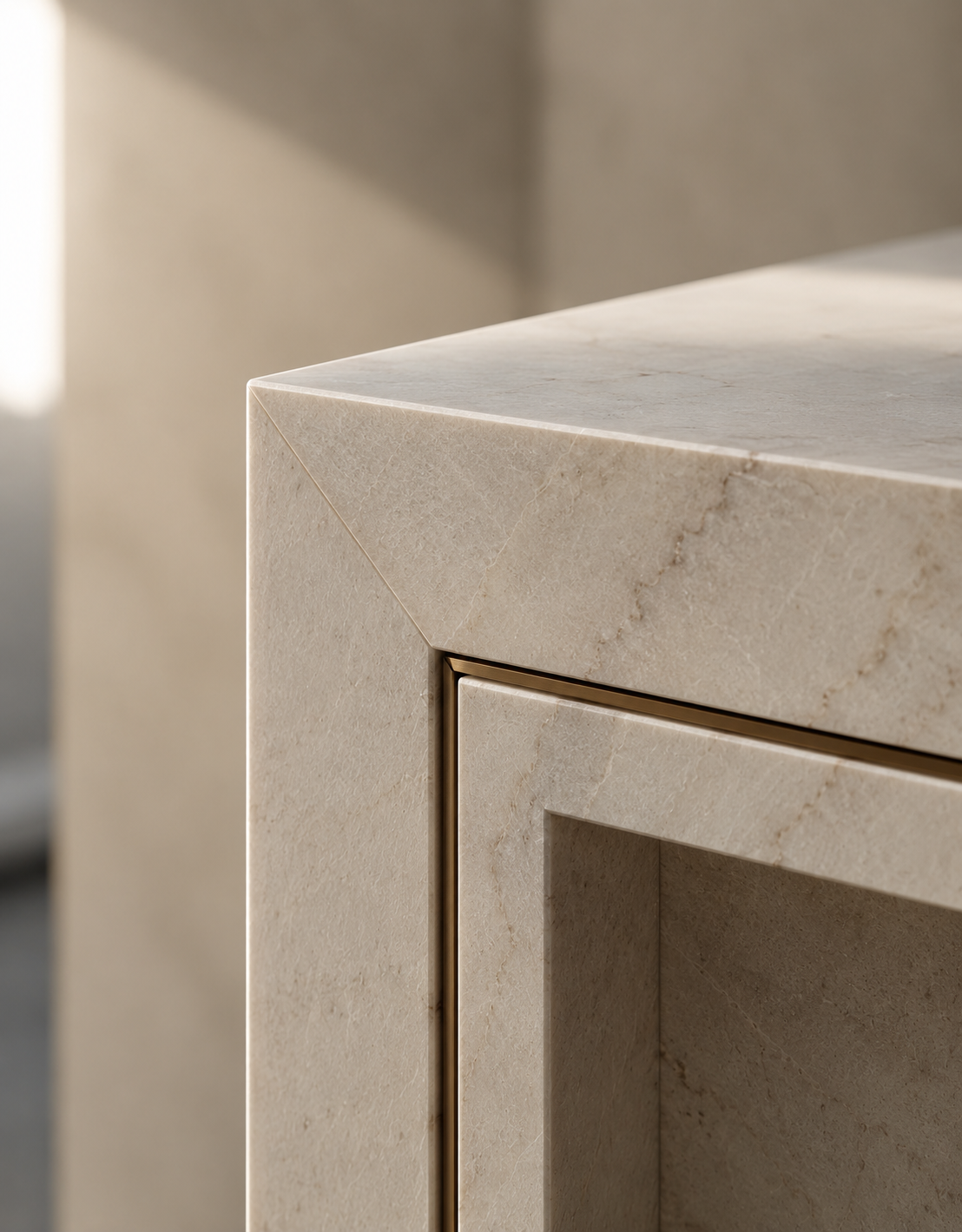
Stone may contain natural veining or areas of weakness. A seemingly simple junction may require a carefully considered fixing method. An edge profile that works beautifully in one material or thickness may need to be adapted in another. Large or complex components may need to be divided, supported, transported and assembled in a particular sequence.
These decisions influence the finished result, yet they are often made long before fabrication formally begins.
Early collaboration gives the design team access to practical knowledge while there is still room to use it. Rather than receiving a completed specification and identifying difficulties at the production stage, the fabricator can help shape a workable solution from the outset.
Protecting the original design intent
Technical input is sometimes mistaken for restriction. In practice, the right fabricator should help preserve the qualities that matter most.
The starting point is understanding the intention behind the detail.
Is the edge intended to appear exceptionally fine? Does a joint need to disappear within the pattern of the material? Must an inlay remain visually continuous across several components? Is the weight and solidity of the piece central to its character, or is the objective to create the appearance of mass with a more efficient construction?
Once the purpose of the detail is understood, an appropriate fabrication method can be developed around it.
This may involve adjusting a radius, refining a joint, selecting a different material thickness or changing the way individual parts are assembled. These can be small technical decisions, but collectively they determine whether the completed work retains the clarity of the original concept.
Material knowledge changes the conversation
Materials do not behave as neutral surfaces.
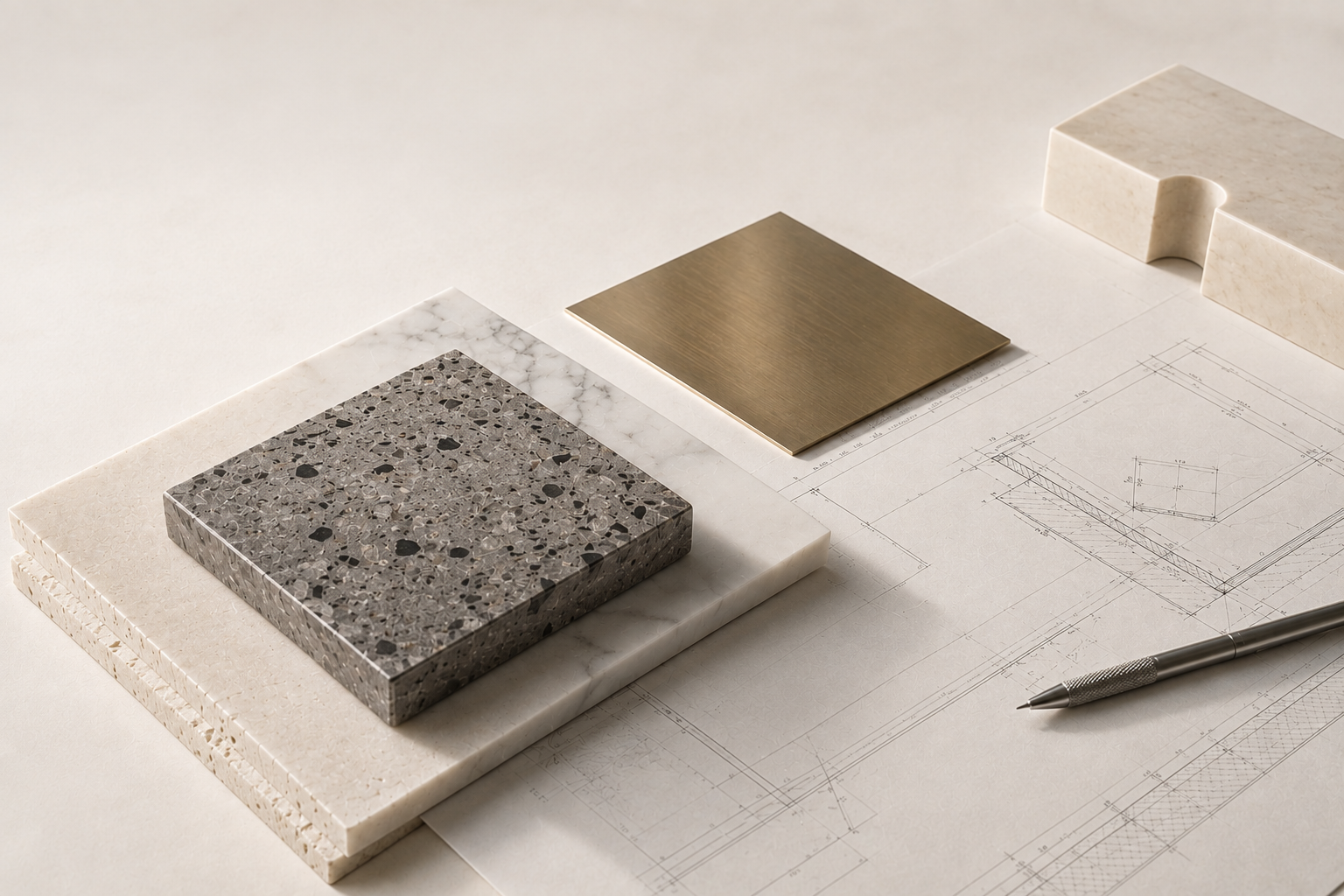
Natural stone varies in strength, density, porosity and veining. Porcelain responds differently to cutting and edge finishing. Terrazzo contains aggregates that affect both its appearance and fabrication. Metals may introduce considerations around movement, tolerances, finishes and compatibility with adjacent materials.
Even two slabs of the same stone can present very different fabrication conditions.
This is why material selection cannot be separated entirely from fabrication. A particular detail may be technically possible, but that does not necessarily mean it will produce the best result in the chosen material.
By reviewing drawings, samples and proposed details early, the fabricator can identify where material characteristics may affect the design. Alternatives can then be considered thoughtfully, rather than introduced later as reactive changes.
The objective is not simply to establish whether something can be made. It is to determine how it should be made—and how the material can be used to its full potential.
Resolving the details before production
Some of the most important fabrication decisions concern areas that may barely be noticed once the project is complete.
Junctions, seams, internal corners, edge profiles, tolerances, fixing points and transitions between materials all require careful resolution. If they are not considered early enough, they can introduce visual interruptions, installation difficulties or unnecessary revisions.
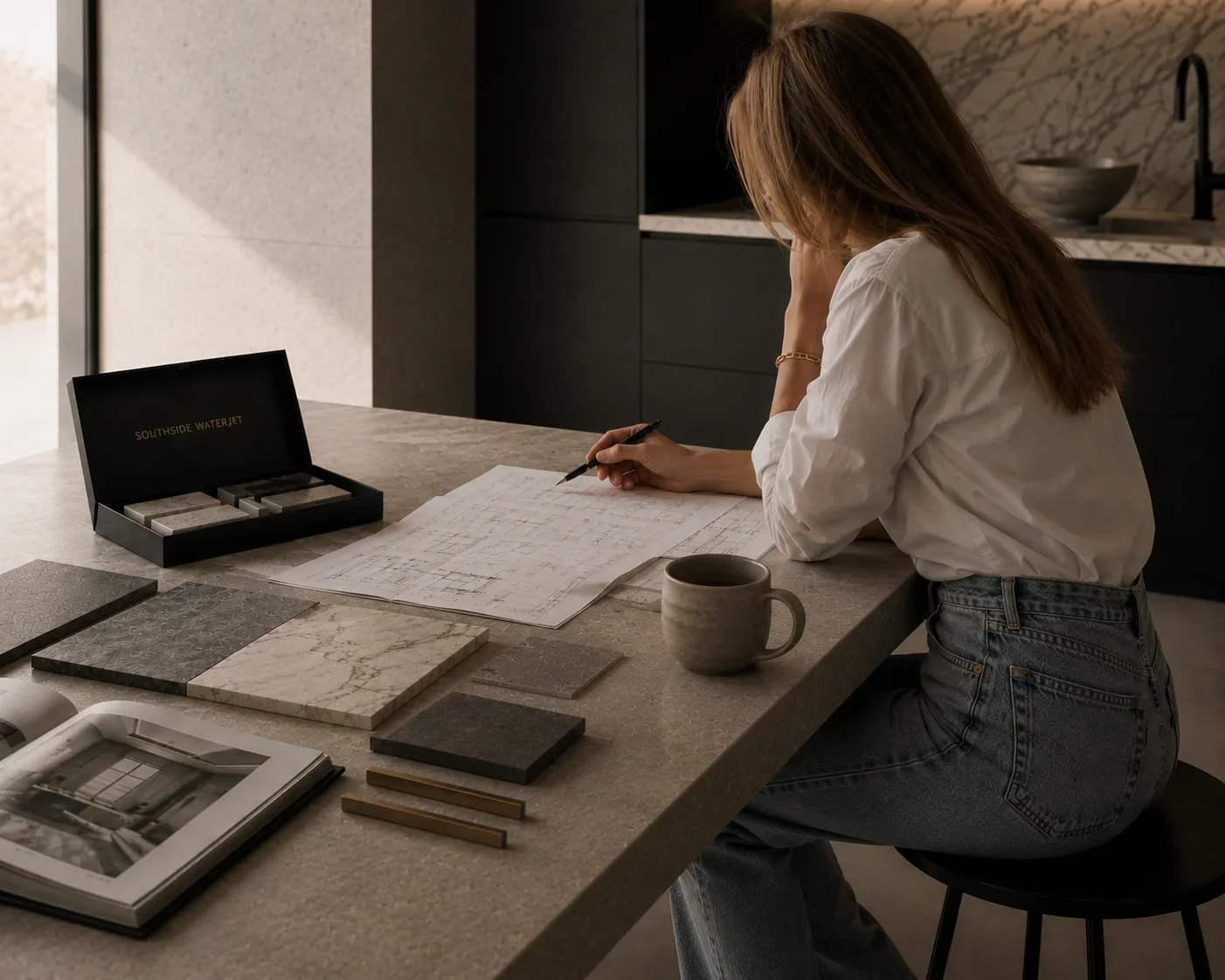
Digital drawings allow these details to be examined and developed before material is cut. Clean CAD files can be checked, geometry can be refined and complex components can be divided into a logical production sequence.
A supporting PDF with clearly marked dimensions, material references and critical details also helps ensure that design information is interpreted consistently by everyone involved.
This preparation may happen behind the scenes, but it has a direct effect on the accuracy and quality of the finished work.
Combining processes intelligently
Complex architectural fabrication rarely depends on one process alone.
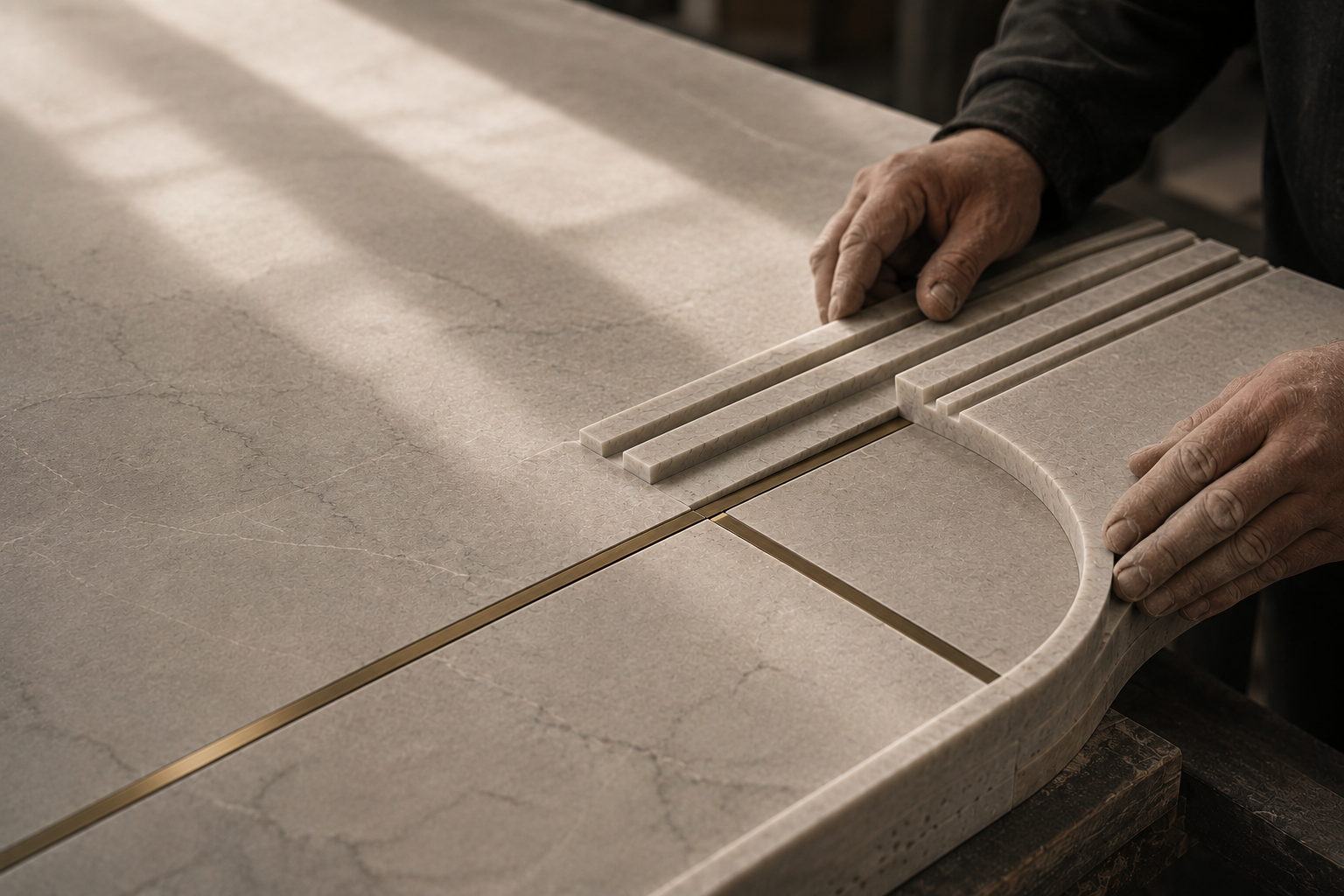
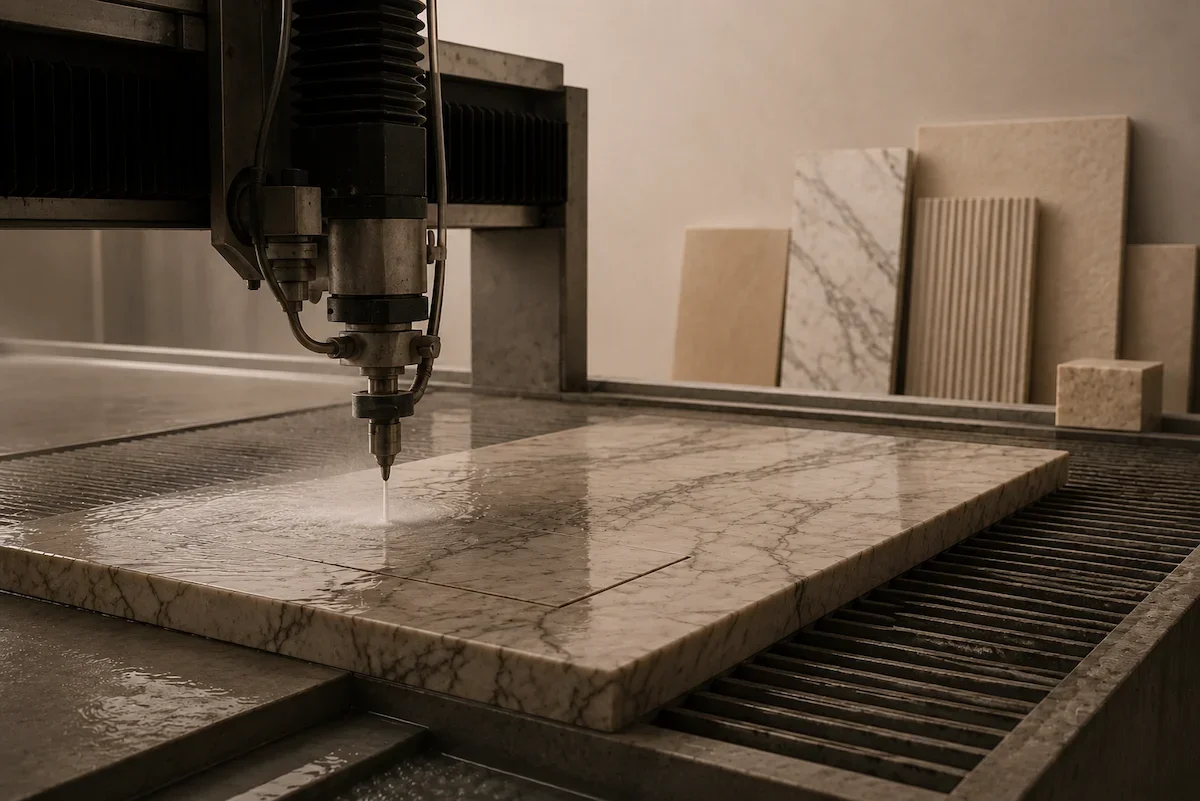
Waterjet cutting may be used to produce intricate shapes, accurate inlays or repeat components. CNC machining can create relief, depth or three-dimensional forms. Traditional stoneworking techniques may then be used to refine edges, develop texture and finish surfaces by hand.
The value lies not simply in having access to these processes, but in knowing how to combine them.
On projects such as CHRONOS at Fresh Wharf, the final work required precision waterjet cutting, CNC machining, bookmatching, brass inlay and extensive hand finishing. The character of the artwork depended on the relationship between digitally controlled accuracy and the deliberately worked surface of the stone.
Elsewhere, the fabrication of reception desks for Investec’s London headquarters involved waterjet-cut components, radius corners, shark nose edges, logo detailing and thermoformed technical stone. Each element formed part of a larger assembly in which the geometry, material and construction method had to work together.
In both cases, fabrication was not a single operation performed at the end of the project. It was a process of interpretation, testing and refinement.
Avoiding unnecessary compromise
Late fabrication input can create pressure for quick decisions.
A detail may already have been approved, materials ordered and installation dates fixed before a practical difficulty is discovered. At that stage, the available solutions may be more limited, more expensive or less faithful to the original design.
Earlier involvement creates space to consider the options properly.
It can help reduce avoidable material waste, identify efficient cutting layouts, establish realistic tolerances and ensure that components can be transported and installed as intended. It can also reveal opportunities to simplify production without changing the appearance of the finished work.
Not every project requires a lengthy development process. Sometimes a short technical conversation or an early drawing review is enough to prevent a much larger problem later.
Collaboration makes ambitious work possible
The role of a specialist fabricator is not simply to receive information and reproduce it.
It is to understand what the designer is trying to achieve, recognise where the risks and opportunities lie, and apply practical knowledge to the development of the work.
This is particularly important when a project involves unusual geometry, mixed materials, intricate inlays, large-format components or details that have not been produced before. In these situations, the route from drawing to finished piece may not be immediately obvious.
It is developed through conversation, drawing, sampling and shared problem-solving.
The strongest results come when design expertise and fabrication knowledge are treated as complementary. The architect or designer defines the intent; the fabricator helps determine how that intent can be carried through the material.
Start the conversation early
A fabricator does not need every answer at the beginning of a project.
Initial sketches, reference images, material ideas or developing CAD drawings can provide enough information to begin a useful discussion. From there, the technical requirements can be established and the fabrication approach refined as the design progresses.
Early collaboration does more than resolve potential problems. It can improve details, reveal new possibilities and give the project team greater confidence in what can be achieved.
Because the best fabrication does not simply follow the design.
It helps the design become real.
Planning a project?
If you are developing a detail, exploring materials or working through a complex fabrication challenge, involve us early. We can review your drawings, discuss the available options and help establish the right approach before production begins.
START A CONVERSATION →